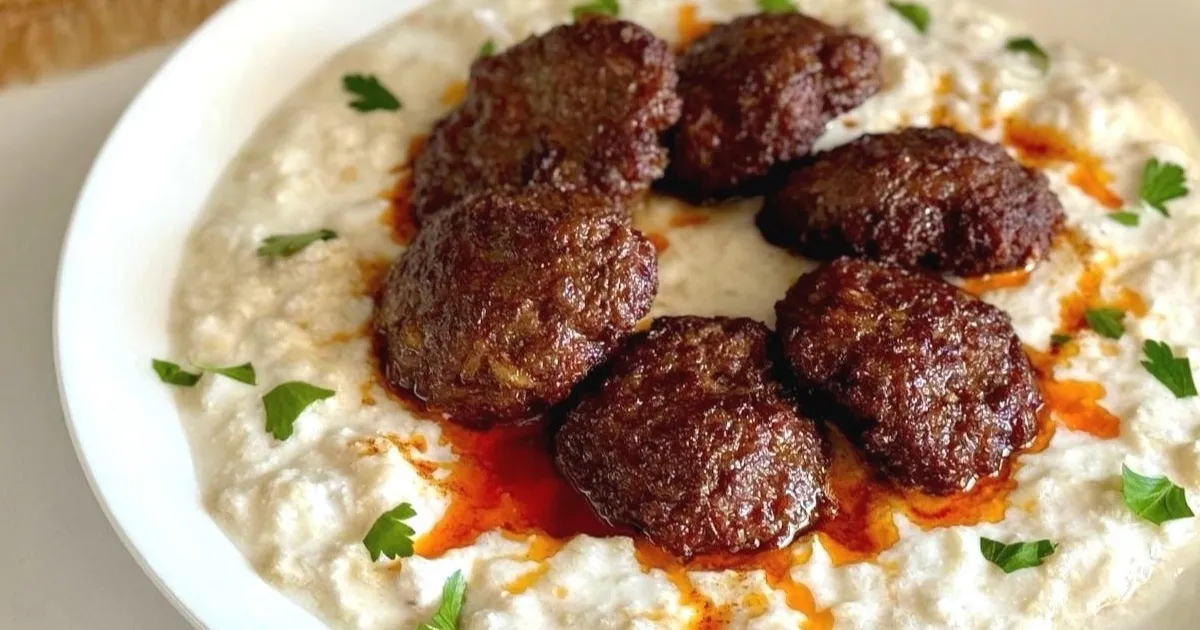
Ali nazik kofte (AH-lee NAH-zik KOF-tay) is the meatball version of one of Gaziantep’s most famous dishes: smoky charred eggplant blended with garlic yogurt, piled with golden meatballs, and finished with sizzling chili butter. In southern Turkey this combination is served at wedding tables and corner kebab houses alike, and it has a devoted following in Istanbul restaurants that re-create the style of the legendary Imam Cagdas.
The dish is often called the gentler cousin of the Ottoman palace favorite hunkar begendi. Both start with eggplants charred until the skin blackens. But where begendi folds that smoky flesh into a rich, cheesy béchamel, ali nazik keeps things lighter and tangier with garlic yogurt. The yogurt cuts through the smoke, the meatballs bring savory depth, and the chili butter ties the whole plate together.
It looks like something from a restaurant menu, but the whole meal comes together in about 45 minutes using one skillet and a grill or broiler. The steps run in parallel so nothing drags: eggplants char while you mix the meat, meatballs brown in the pan while the eggplant cools. Here is how to make it.
Key Takeaways
- Ali nazik means “gentle touch.” The name is said to honor the cook’s deft hands, and the dish itself is delicate: smoky eggplant, tangy yogurt, tender meatballs.
- The smoke is the flavor. Char the eggplant over a flame until the skin is black and the flesh collapses, then squeeze the liquid out.
- Garlic yogurt, not béchamel. This is what separates ali nazik from hunkar begendi, its bechamel-based palace cousin.
- Mix the meatballs just until combined so they stay loose and juicy instead of dense.
- Finish with chili butter. Melted butter bloomed with pul biber adds color and gentle heat right before serving.
How to Make Ali Nazik Kofte
- Char the eggplants directly over a gas flame or under a broiler, turning with tongs, until the skins are completely blackened and the flesh has collapsed, about 12 to 15 minutes total. If the flesh still resists a gentle press, keep charring.
- Transfer the eggplants to a plate and let cool for 5 minutes. Peel off the charred skin, scoop out the flesh, and squeeze dry. The smoky pulp holds watery, slightly bitter liquid, so pressing it out keeps the base concentrated.
- Make the garlic yogurt: stir the yogurt with half the grated garlic and a pinch of salt. Whole-milk yogurt gives the creamiest texture; Greek yogurt works too, thinned with a splash of water if it is very thick.
- Make the meatballs: combine the ground beef, grated onion, remaining garlic, egg, breadcrumbs, cumin, salt, and pepper. Mix just until combined, then roll into 16 to 18 walnut-sized balls.
- Heat the olive oil in a large skillet over medium-high heat. Brown the meatballs in batches for 3 to 4 minutes per side until golden and cooked through to 165°F. Transfer to a plate.
- Warm the chopped eggplant in the same skillet over low heat for 2 to 3 minutes, then fold in the garlic yogurt and season with salt. Do not let it boil, or the yogurt can curdle.
- Spread the eggplant-yogurt base on a serving plate. Arrange the meatballs on top. Melt the butter with the red pepper flakes over low heat for 1 to 2 minutes until it sizzles, then drizzle over everything. Garnish with chopped parsley and serve at once.
Ingredients
- 2 large eggplants (about 1 1/2 lbs / 680 g total)
- 1 lb (450 g) ground beef (80/20), or half beef and half lamb
- 1 small onion, grated and squeezed dry
- 2 cloves garlic, grated
- 1 large egg, lightly beaten
- 1/2 cup (50 g) plain breadcrumbs
- 1 tsp ground cumin
- 1 tsp kosher salt
- 1/2 tsp black pepper
- 2 tbsp olive oil, for frying
- 1 cup (240 g) plain whole-milk yogurt, or Greek yogurt
- 2 tbsp butter
- 1 tsp red pepper flakes (pul biber)
- Fresh parsley, chopped, for garnish
What Is Ali Nazik?
Ali nazik (also spelled alinazik or alanazik) is a meat-and-eggplant dish from Gaziantep, a city in southeastern Turkey famous for its kebabs and baklava. The structure is always the same: a puree of charred, smoked eggplant on the bottom, garlic yogurt folded in or layered on top, and meat over it all. The meat changes with the cook. Restaurants often use cubed lamb or lamb shish grilled over charcoal. Home cooks more often reach for meatballs, which is exactly how the köfteli ali nazik (ali nazik with meatballs) became a weekday staple across Turkey.
The dish is taken so seriously at home that the Turkish patent office granted a patent for “Gaziantep alinaziği” to the local municipality, as A Kitchen in Istanbul notes. If you look for the dish in Gaziantep itself, one of the most famous stops is Imam Cagdas, a restaurant that has served the region’s kebabs for generations and layers its ali nazik as a clean eggplant base, a garlic yogurt layer, and the meat on top.
The name literally translates to “gentle Ali,” and some stories trace the dish to a cook named Ali whose careful hands shaped it; others read it more loosely as “gentle touch,” a nod to the cook’s care. The exact origin story is debated, but the cooking logic is not: a little sweetness in the fire-charred eggplant, tang from the yogurt, richness from the meat, and heat from the chili butter.
Ali Nazik vs Hunkar Begendi
Both ali nazik and hunkar begendi (the “sultan liked it” dish) are Turkish eggplant classics, and both rely on the same smoky charred base. The difference is the binder. Hunkar begendi is a palace dish: eggplant folded into a butter-and-flour béchamel enriched with melted kaşar cheese, silky and luxurious. Ali nazik comes from the home kitchens of Gaziantep: eggplant mashed with garlic yogurt, tangy and light.
| Ali Nazik | Hunkar Begendi | |
|---|---|---|
| Base | Charred eggplant + garlic yogurt | Charred eggplant + cheese béchamel |
| Flavor | Tangy, smoky, fresh | Rich, buttery, cheesy |
| Origin | Gaziantep home cooking | Ottoman palace kitchen |
| Meat | Meatballs or grilled lamb | Meatballs, beef stew, or chicken |
If you already make begendi, ali nazik is the perfect summer swap: no roux, no milk, just yogurt, and it pairs beautifully with a cold glass of ayran on hot evenings.
Tips for the Best Ali Nazik Kofte
Get the eggplants properly smoked
The single most important step is charring the eggplant. Lay each one over a gas flame, turning every 2 to 3 minutes, until the skin is entirely black and blistered. Under a broiler, position them close to the heat and turn them as each side blackens. The peeled flesh should smell like a campfire, not a steamed vegetable. Squeeze out the watery juices before chopping, and your base will be smoky, thick, and concentrated.
Keep the meatballs loose
The same rule that applies to inegol kofte and every Turkish köfte holds here: mix only until the ingredients come together. The breadcrumbs and egg act as a panade that traps moisture, but only if you stop while the mixture is still loose. Overworked ground meat turns sausage-dense.
Watch the yogurt
Do not let the eggplant-yogurt base boil once you fold them together. High heat makes yogurt curdle and separate, leaving a grainy sauce. Warm the eggplant gently, stir in the yogurt off the heat or over the lowest flame, and season from there. If you want a thicker base, use strained (süzme) yogurt, like many Turkish recipes do.
Bloom the chili butter
A pinch of pul biber ready next to the stove means the butter and chili hit the pan together. Let it bubble for a minute until the flakes sizzle and smell toasty, then pour it over the meatballs right before serving. The butter reads as indulgence, the chili as warmth, and together they wake up the whole plate.
Serving Ideas
- Serve with warm pide or lavash to mop up the eggplant-yogurt base, the way it is eaten in Gaziantep restaurants.
- Over fluffy white rice or bulgur pilaf for a more filling dinner, alongside a shepherd’s salad.
- With a bowl of cold ayran (salted yogurt drink) or cacık to balance the smoke and heat.
- For a lighter version, swap the beef for tavuk kofte - chicken meatballs work beautifully on the same smoky base.
Storage and Reheating
Ali nazik keeps in the fridge for up to 3 days in a sealed container, but store the meatballs, eggplant-yogurt base, and chili butter separately so the yogurt stays fresh. Reheat gently: warm the base in a skillet with a splash of water over low heat, and rewarm the meatballs in the same pan or in a 350°F oven for 5 to 7 minutes. Do not microwave the yogurt base on high, or it will split. The dish does not freeze well because yogurt changes texture when thawed.
FAQ
Why is it called ali nazik?
The name literally translates to “gentle Ali” (nazik means gentle in Turkish), and some stories say the dish comes from the gentle hands of a cook named Ali. Others read it as “gentle touch,” a nod to the cook’s care. Either way, the dish is traced to Gaziantep in southeastern Turkey.
What is the difference between ali nazik and hunkar begendi?
Ali nazik uses garlic yogurt as the binder for the charred eggplant, while hunkar begendi folds the eggplant into a cheese béchamel. Both are served with meat, but ali nazik is tangier and lighter, and begendi is richer and silkier.
Can I use lamb instead of beef for the meatballs?
Yes. Lamb and beef together is a classic Turkish combination, and it is common to use medium-fat lamb, either alone or half and half with beef. Lamb adds richness that pairs well with the smoky eggplant.
Do I have to char the eggplant over an open flame?
The flame (or broiler) char is what gives ali nazik its signature smoky flavor, so it is worth doing properly. Oven roasting at 450°F works in a pinch and still softens the flesh, but you lose some of the campfire depth.
Can I make ali nazik ahead of time?
You can prep the components a day ahead: char and chop the eggplant, shape the meatballs, and mix the garlic yogurt. Keep them chilled separately and assemble when you are ready to eat. Fully assembled leftovers are best within 3 days.
What do you eat with ali nazik kofte?
Flatbreads like pide or lavash are traditional for scooping up the creamy base. Rice or bulgur pilaf, a fresh salad, and a cold glass of ayran all round out the meal.