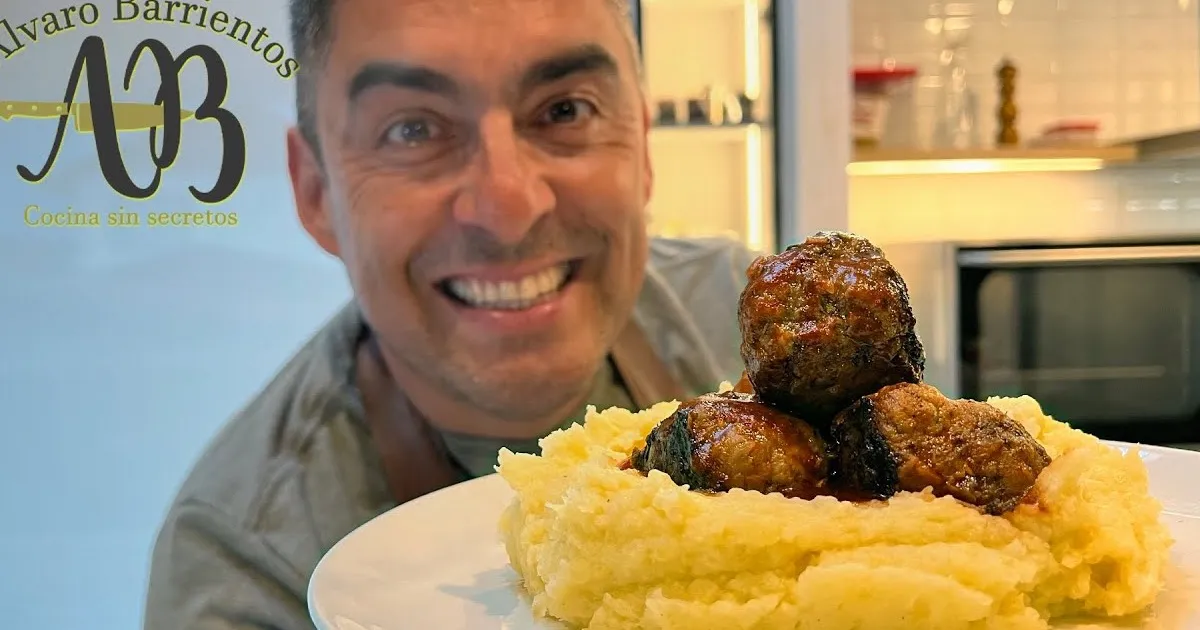
Chilean albondigas al jugo - meatballs in a light, glossy onion-and-tomato sauce - is the kind of humble home dish that defines a country’s tables. Unlike the thick marinara of Italian polpette or the brothy vegetable soup of Mexican caldo, the Chilean version cooks in a thin “jugo” (juice): a soft onion, tomato, and red wine sauce that clings to each albondiga without drowning it.
What makes it special is that runny, almost brothy gravy. Chili’s bakers and grandmothers build the jugo the same way every time - slow-cooked onion, a splash of dry red wine, a little tomato, and a whisper of sugar - then simmer the meatballs right in it so they stay impossibly tender. It is served over white rice or Chile’s signature puré de papas, and it disappears fast.
This recipe walks through the dish in about an hour: soft panade meatballs, a deeply flavored jugo, and a gentle simmer that does all the work. Let’s get to it.
Key Takeaways
- A light, thin sauce is the point. Albondigas al jugo uses a runny onion, tomato, and red wine sauce, not a thick gravy.
- Bread panade keeps the lean beef tender during a long simmer.
- A pinch of sugar and a bay leaf balance the red wine in the jugo.
- Serve over white rice or puré de papas and spoon the jugo on top.
- Gluten and sugar are minimal - this is a simple, weeknight-friendly South American classic.
How to Make Chilean Albondigas al Jugo
- Soak the bread in water or milk for 5 minutes, then squeeze dry. In a bowl, combine the beef, soaked bread, grated onion, garlic, egg, parsley, salt, and pepper. Mix gently, shape into about 18 meatballs, and dust each lightly with flour.
- Heat 1 tablespoon of oil in a large skillet over medium heat. Cook the diced onion for 5 to 6 minutes until soft and golden, then add the garlic and cook 1 minute more.
- Add the tomatoes, peeled, seeded, and diced (concasse), along with the red wine, bay leaf, oregano, sugar, and broth. Bring to a simmer and cook 10 minutes to let the jugo concentrate.
- Heat the remaining oil in a separate skillet over medium-high. Brown the meatballs in batches for 3 to 4 minutes per side until golden, then set them aside.
- Add the browned meatballs to the sauce, along with the peas and carrots if using. Simmer gently, uncovered, for 20 to 25 minutes until the meatballs are cooked through and the jugo reduces slightly.
- Whisk the flour into the cold water to make a slurry, then stir it into the jugo. Simmer 5 more minutes until the sauce glistens and lightly coats the back of a spoon.
- Serve over steamed white rice or puré de papas, spooning the onion jugo over the top, and garnish with chopped parsley.
Ingredients
- 1 lb (450 g) lean ground beef (90/10)
- 2 slices day-old white or rustic bread, crusts removed
- 1/3 cup water or milk, for soaking
- 1 small onion, grated
- 2 cloves garlic, minced
- 1 large egg, lightly beaten
- 1/4 cup chopped fresh parsley
- 1 tsp kosher salt
- 1/2 tsp black pepper
- 1 tbsp all-purpose flour, for dusting
- 2 tbsp neutral oil (canola or sunflower), divided
- 1 large onion, finely diced
- 2 cloves garlic, minced
- 2 ripe tomatoes, peeled, seeded, and diced, or 1 cup crushed tomatoes
- 1/3 cup dry red wine
- 1 small bay leaf
- 1 tsp dried oregano
- 1/2 tsp sugar
- salt and black pepper, to taste
- 1 1/2 cups (360 ml) beef broth or water
- 1 tbsp all-purpose flour dissolved in 3 tbsp cold water (slurry)
- Optional: 1 cup frozen peas and carrots
- Steamed white rice or puré de papas, for serving
- Chopped fresh parsley, for garnish
What Is Albondigas al Jugo?
Albondigas al jugo translates to “meatballs in juice,” and the jugo is the whole point of the dish. It is a thin, oniony sauce that sits somewhere between a gravy and a broth - glossy enough to coat a meatball, runny enough to soak into a mound of rice. The technique is distinctly Chilean: a long-cooked yellow onion softened into a sweet base, brightened with tomato and a splash of dry red wine, and finished with a pinch of sugar and a bay leaf.
It is easy to confuse the dish with its Mexican and Spanish relatives, so here is how they differ:
| Dish | Sauce / broth | Character | Typical serving |
|---|---|---|---|
| Chilean albondigas al jugo | Thin onion, tomato, and red wine jugo | Light, glossy, gently sweet-savory | White rice or puré de papas |
| Mexican caldo de albondigas | Chunky tomato-vegetable soup | Brothy, mint-and-rice meatballs, generous vegetables | Soup bowl, often with tostadas |
| Spanish albondigas en salsa | Thick paprika-tomato sauce | Richer, tapas-style, slow-simmered | As a tapa, with bread |
If you enjoy Peruvian meatballs in creamy huancaina sauce or the rich guisadas of the Caribbean, albondigas al jugo will feel familiar in spirit but unique on the plate - South American meatball culture, carried by a light sauce instead of a heavy one.
Tips for the Best Albondigas al Jugo
- Do not skip the panade. The soaked bread is what lets lean beef stay tender through a 20 to 25 minute simmer. Dry meatballs ruin the dish.
- Take the onion to golden. A properly softened, golden diced onion is the backbone of the jugo. Rushing it leaves a sharp, watery sauce.
- Use a real red wine you would drink. It does not take much - one third cup - but a decent dry red adds depth that water cannot match. A good everyday Cabernet or Merlot works.
- Add the slurry gradually. The flour-water mixture is meant to lightly gloss the jugo, not turn it into gravy. Stir it in and judge; you can add a little more if you want body.
- Taste and balance. The sugar and red wine need each other. If the jugo tastes sharp, a pinch more sugar. If it is flat, a splash more wine or salt.
Variations
- Puré de papas swap. The most traditional Chilean side is puré de papas - potatoes cooked with butter and milk until mashed soft. Either works over rice.
- Turkey or chicken. Swap the lean beef for ground turkey or chicken for a lighter bowl, keeping the panade so it stays moist.
- Add a kick. A seeded fresh aji or a pinch of smoked paprika in the jugo gives the dish gentle heat, a more coastal Chilean style.
- Pressure cooker shortcut. Brown the meatballs, build the jugo, then cook 8 to 10 minutes on high in a pressure cooker and release naturally. Great for busy weeknights.
- Gluten-free. Substitute the bread panade with soaked gluten-free bread or 2 tablespoons of almond flour, and swap the flour slurry for cornstarch mixed with cold water.
Feeling the South American meatball mood? Try the Brazilian almondegas in tomato sauce, the Colombian albondigas soup, or the Dominican albondigas guisadas - each puts its own spin on the same beloved shape. And for more saucy Latin takes, browse the Mexican meatball recipes roundup.
Storage and Reheating
- Fridge: Store albondigas and jugo together in a covered container for up to 4 days. The flavor improves overnight.
- Freeze: Freeze in an airtight container for up to 3 months. Thaw in the fridge overnight before reheating.
- Reheat: Warm gently over low heat in a covered skillet with a splash of broth, about 10 to 12 minutes, until the meatballs are hot through. The jugo may need a small reheating whisk.
FAQ
What does “al jugo” mean in Chilean cooking? Al jugo literally means “in juice.” In Chile it describes the light, runny sauce the meatballs are simmered in - a soft onion, tomato, and red wine base that is thinner than a gravy but richer than a broth. The meatballs soak up this jugo as they cook, which keeps them moist and flavor-packed.
How is albondigas al jugo different from Mexican albondigas? Mexican caldo de albondigas is a tomato-and-vegetable soup with minty, rice-studded meatballs meant to be eaten with a spoon. Chilean albondigas al jugo is drier - a light onion and red wine sauce that hugs the meatballs and is served over rice or mashed potatoes. The two share a name but not a personality.
Can I make albondigas al jugo without wine? Yes. Replace the red wine with an equal amount of beef broth plus 1 tablespoon of red wine vinegar for acidity, or a splash of pomegranate juice for sweetness. Add it with the tomatoes. You lose a little depth but keep the balance.
Why are my meatballs dry? Dry meatballs almost always mean a skipped panade or overcooked lean beef. Use the soaked bread, do not overmix, and only simmer until cooked through - 20 to 25 minutes at a gentle bubble. Overworking the beef and boiling hard are the two classic killers.
What sides go with albondigas al jugo? White rice is the standard choice, soaking up the runny jugo. Chile’s puré de papas (mashed potatoes with butter, milk, and sometimes a little nutmeg) is the other classic. A simple salad or green beans round out the plate.