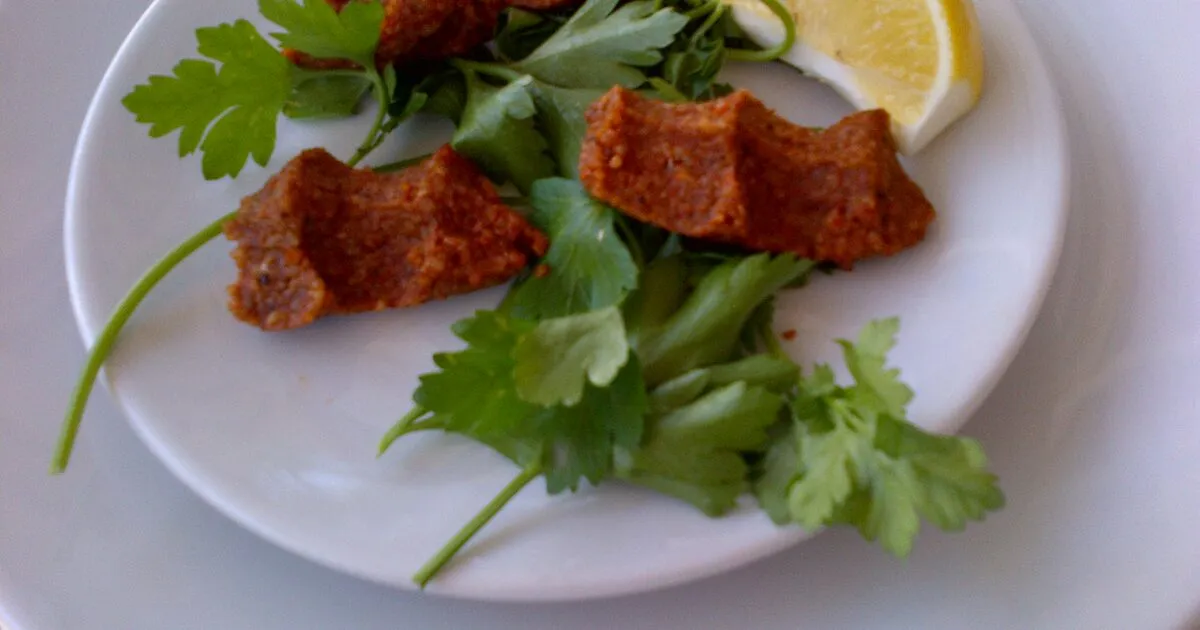
Cig kofte (çiğ köfte, pronounced chee kof-teh) is the Turkish “raw meatball” that is no longer raw. Today it is a deep red, spice-packed dough made from fine bulgur, tomato and red pepper pastes, isot and pul biber, walnuts, and pomegranate molasses - kneaded until silky, shaped into ridged little patties, and eaten wrapped in a lettuce leaf with a squeeze of lemon. It is one of Turkey’s most beloved street foods, and it happens to be completely vegan.
The name means “raw meatball” because that is how the dish started: raw, fat-free minced beef or lamb kneaded by hand with bulgur and spices in southeastern Turkey. In 2008 the Turkish Health Ministry banned raw meat in köfte sold commercially, and the bulgur version took over. Nearly every çiğ köfte shop in Turkey today is selling a plant-based dough. That makes it a natural fit alongside our other no-cook, make-ahead recipes like vegan lentil meatballs, with the bold spicing of the Turkish meatball family.
The dough is the whole game. Grated tomato and onion, three kinds of red pepper influence, cumin, and a big pour of pomegranate molasses get worked into the bulgur until it turns into a smooth, sticky, almost tartare-like paste. It takes some kneading, but the payoff is a snack that is tangy, warm with spice, and shockingly savory for something cooked nowhere near a stove. Nothing else on this site tastes quite like it.
How to Make Çiğ Köfte
- Put the fine bulgur in a large bowl and pour 2 cups (475 ml) of boiling water over it. Stir once, cover, and let it soak for 15 to 20 minutes until the water is absorbed and the bulgur is tender.
- Grate the tomatoes into a bowl with their juices and discard the skins. Grate the onion and squeeze dry with your hands - the onion liquid makes the dough weepy. Crush the garlic.
- In a food processor, pulse the walnuts until they look like coarse flour. Add the soaked bulgur, tomatoes, onion, garlic, tomato paste, red pepper paste, pul biber, isot, cumin, salt, black pepper, pomegranate molasses, and olive oil. Pulse for 1 to 2 minutes, scraping the sides once or twice, until the mixture binds into a deep red dough.
- Transfer to a bowl and knead by hand for 8 to 10 minutes, pressing and folding, until the dough is smooth, pliable, and no longer crumbly. Taste it - it should be bold, tangy, and warm with spice. Adjust salt or pomegranate molasses.
- Cover and refrigerate for at least 4 hours, or overnight. This rest lets the bulgur fully soften and the flavors meld, and it makes the dough easier to shape.
- Shape the köfte: wet your hands (gloves help), take about 1 tablespoon (30 g) of dough, roll it into a firm sausage, and press it gently in your fist to leave finger indents down the sides, the signature cig kofte look. Repeat with the rest.
- Arrange the cig kofte on a platter with lettuce leaves and lemon wedges. To eat, nestle a köfte in a lettuce leaf, squeeze lemon over it, add a drizzle of pomegranate molasses if you like, and eat it like a wrap.
Ingredients
- 2 cups (300 g) fine bulgur (köftelik bulgur)
- 2 cups (475 ml) boiling water
- 2 medium tomatoes (about 250 g), grated with juices
- 1 medium onion (about 150 g), grated
- 3 cloves garlic, crushed
- 1 cup (125 g) walnuts, toasted
- 2 tbsp tomato paste
- 2 tbsp Turkish sweet red pepper paste (tatlı biber salçası)
- 1 tbsp pul biber (Aleppo pepper)
- 1 tbsp isot biber (Urfa pepper)
- 1 tsp ground cumin
- 1 tsp baharat or ground allspice (optional)
- 1 tsp kosher salt, plus more to taste
- 1/2 tsp black pepper
- 1/3 cup (80 g) pomegranate molasses
- 1/3 cup (80 ml) extra virgin olive oil
- 1 head romaine lettuce, leaves separated, for serving
- 2 lemons, cut into wedges, for serving
Ingredient Notes and Substitutions
- Fine bulgur (köftelik bulgur) - the single most important ingredient. Only the finest grain, sold as köftelik bulgur in Turkish grocers, will absorb the liquids and knead into a smooth dough. Coarse bulgur stays gritty and falls apart. Brown or yellow both work; the dark variety has a slightly nuttier flavor.
- Isot (Urfa pepper) - a dark, mild Turkish chili flake with a smoky, almost raisin-like sweetness. It is what gives modern cig kofte its deep color and gentle warmth. Order it online from a Turkish grocer if your local store does not stock it.
- Pul biber (Aleppo pepper) - fruity, moderately spicy chili flake that adds the forward heat. If you only have one Turkish pepper, this is the one to buy. Use both if you can - they play different roles.
- Turkish red pepper paste (tatlı biber salçası) - sweet, concentrated, and essential to the color and umami. Hot pepper paste (acı biber salçası) works for a spicier version; do not substitute tomato paste 1:1, the flavor is different.
- Pomegranate molasses - tart and lightly sweet. It must be real pomegranate only - check the label, many supermarket bottles are sugar syrup. Turkish and Middle Eastern grocers carry the real thing.
- Walnuts - traditionally toasted and ground into the dough for richness. This is why we flag them in the kofta glossary, too: many köfte-style recipes across the region use toasted nuts for body.
- Tomatoes - grate them on a box grater and keep every drop of juice. The juices are what hydrate the bulgur along with the soaking water.
What Is Çiğ Köfte?
Çiğ köfte (also spelled cig kofte or cigkofte) translates literally to “raw meatball” - çiğ means raw, köfte means meatball. The dish comes from southeastern Turkey, centered on Şanlıurfa, where it began as raw, fat-free minced beef or lamb kneaded with fine bulgur and a wall of spices. Meat from different animals is a whole family of recipes on this site; here it is the raw preparation that defines the style.
For most of its history, the raw meat version was the only version. But raw meat and hot climate storage do not mix, and in 2008 the Turkish Health Ministry banned raw meat in commercially sold köfte. The street food adapted: finely ground bulgur took the place of the meat, the heavy spicing stayed, and çiğ köfte became a vegan dish. Walk through any Turkish city today and the çiğ köfte shops are selling bright-red bulgur dough, shaped to order, wrapped in lettuce. It is one of the rare cases where the “fake” version became more famous than the original.
As a köfte, it sits comfortably in the wider Turkish meatball family we cover on this site: İnegöl köfte and Adana köfte are grilled, pideli köfte is baked with pide bread. Çiğ köfte is the no-fire outlier - kneaded, not grilled, and all the better for it on a hot day.
Tips for the Right Texture
The difference between good and great cig kofte is the kneading. The bulgur needs to break down enough to drink up the tomato juices and the olive oil, turning from coarse grains into a pliable, slightly tacky dough. Shortcuts skip this step and the köfte crumble the moment you pick them up.
Soaking in boiling water first is the at-home shortcut that makes the rest possible. Fifteen minutes of soaking softens the bulgur enough that a food processor can finish the job in a couple of minutes. If you want the full traditional method, skip the processor entirely and knead on a large flat tray for about an hour, working the dough in one direction with the heel of your hand. It is a workout, but the texture is excellent - and it is exactly what the vendors in Şanlıurfa still do on their ridged trays.
Taste before shaping. The dough should hit you with tang from the pomegranate molasses, warmth from the peppers, and salt that wakes everything up. If it tastes flat, it needs more salt or more molasses - usually both. Remember the dough will be eaten cold, so season it like a finished dish, not like something that will cook.
How to Serve Çiğ Köfte
The classic serving is a piece of romaine, one köfte on top, a squeeze of lemon, and a little extra pomegranate molasses if you like it tangy. You fold it and eat it in two or three bites. The lettuce should be crisp enough to crunch against the soft dough.
It is equally at home on a meze table with hummus and olives, as a starter before grilled tekirdağ köfte-style meats, or as a snack straight from the fridge. In Turkey, dürüm shops also spread the raw dough onto flatbread with lettuce, tomato, and a squirt of lemon - one of the best street-food wraps around. Either way it is served cold, which makes it a perfect make-ahead appetizer for parties.
Variations Worth Trying
- Spicier version - use acı (hot) pepper paste instead of tatlı, and add a teaspoon of red pepper flakes or fresh chili with the spices.
- Nut-free version - skip the walnuts and add an extra 1/4 cup (40 g) of fine bulgur. The texture is less rich but still holds together. Tell guests, since the classic version does contain nuts.
- Sunnier take - swap half the pomegranate molasses for lemon juice and add a pinch of sumac for a brighter, more acidic köfte.
- Wrap version - instead of shaping patties, spread the dough on flatbread with lettuce, tomato wedges, pickles, and lemon; roll it like a dürüm and slice on the diagonal.
Note on gluten: bulgur is wheat, so cig kofte is not gluten-free. If you need a gluten-free köfte-style recipe, our kofta curry approaches use rice or chickpea binders instead.
Storage and Make-Ahead
Çiğ köfte is one of the best make-ahead recipes in the Turkish repertoire. The dough can sit covered in the fridge for up to 24 hours before shaping - in fact the flavors improve overnight. Once shaped, the köfte keep in a sealed container in the fridge for 3 to 4 days.
For freezing, shape the köfte first, freeze them in a single layer on a tray until solid, then transfer to a freezer bag for up to 3 months. Thaw overnight in the fridge. The dough holds up much better than cooked meatballs because there is no moisture loss to worry about - it just needs to come back to room temperature, or a few minutes on the counter wrapped in a damp towel.
Extra dough is not a problem, either. It was never raw meat, so there is no safety clock ticking. Keep it covered so it does not dry out, and it will be waiting for you on snack duty for days.
FAQ
Is cig kofte raw? The modern version is not raw. Çiğ köfte sold in Turkey today is a bulgur-based vegan dough - there is no meat in it, cooked or raw. The name survives from the historical recipe, which used raw minced beef or lamb until the Turkish Health Ministry banned raw meat in köfte in 2008.
Is cig kofte vegan? Yes, the standard version is vegan: fine bulgur, tomato and red pepper pastes, spices, walnuts, pomegranate molasses, and olive oil. If you order it from a shop, ask - some kitchens still prepare a raw-meat version on request.
Does cig kofte have nuts? Traditionally, yes. Most recipes include walnuts blended into the dough for richness and texture. If you have a nut allergy, ask for or make the nut-free version, which replaces the walnuts with extra bulgur.
What is cig kofte made of? Fine bulgur, grated tomato and onion, tomato paste, Turkish red pepper paste, pul biber and isot, cumin, walnuts, pomegranate molasses, olive oil, salt, and black pepper. Everything is soaked, blended, and kneaded - nothing is cooked.
How do you eat cig kofte? Place a köfte on a piece of romaine lettuce, squeeze lemon over it, add pomegranate molasses if you like, and eat it like a wrap. It is served cold, usually as a meze, snack, or street-food wrap in flatbread.
Can you freeze cig kofte? Yes. Shape the köfte, freeze them on a tray until solid, then store in a freezer bag for up to 3 months. Thaw overnight in the fridge - the dough keeps its texture remarkably well.
Sources
- Çiğ köfte | Wikipedia, history of the raw-meat original and the 2008 Turkish ban
- How to Make Çiğ Köfte (Vegan Turkish Bulgur Balls) | Baking Hermann, food processor and traditional tray methods with ingredient ratios
- Çiğ Köfte Recipe | A Kitchen in Istanbul, authentic proportions and shaping technique
- Cig Kofte | Give Recipe, ingredient notes on köftelik bulgur and serving
- Vegetarian Turkish Cig Kofte | The Spruce Eats, isot pepper guidance and resting times