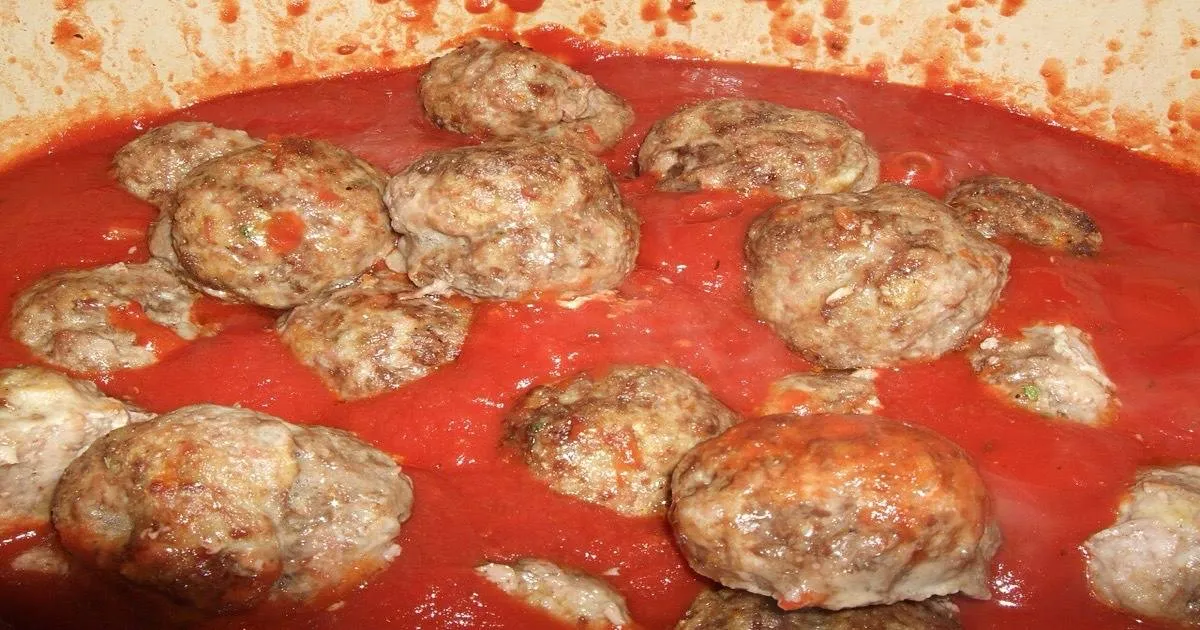
Iraqi kofta in tomato sauce is home cooking you find from Baghdad kitchens to diaspora tables: small beef meatballs seasoned with baharat, browned, then simmered in a thick tomato gravy. The sauce is meant for rice. Spoon it over basmati and let the grains soak up the spiced tomato.
This is not grilled street kofta on skewers. It is the stew-style version Iraqi cooks call kofta bil marag (kofta in broth), close to what you see in Lebanese Dawood Basha but with a heavier hand on cumin and baharat instead of cinnamon and pine nuts. If you already make Jordanian kofta bil laban, this tomato route is the savory counterpoint on the same spice shelf.
One wide skillet, one simmer, about 50 minutes start to finish. Good for weeknights and for feeding a crowd over a big pot of rice.
Key Takeaways
- Baharat (or Iraqi 7-spice) defines the flavor. Warm allspice, black pepper, and cinnamon notes show up in both the meat and the sauce.
- Squeeze grated onion dry. Wet mix falls apart in the pan.
- Brown first, simmer second. A quick sear adds depth before the tomatoes go in.
- Simmer covered for 20 to 25 minutes so the kofta cook through and the sauce thickens.
- Serve over basmati rice with parsley on top. Warm pita on the side is optional but welcome.
How to Make Iraqi Kofta
-
Grate the onion and squeeze out excess liquid over the sink. In a large bowl, combine the ground beef, squeezed onion, minced garlic, chopped parsley, egg, breadcrumbs, 1 tbsp baharat, cumin, salt, and pepper. Mix with your hands until just combined.
-
Roll 18 meatballs, about 1.5 inches across. Place them on a plate. They should feel tacky but hold their shape.
-
Heat 2 tbsp olive oil in a large deep skillet or Dutch oven over medium-high heat. Add the kofta in batches and brown for 2 to 3 minutes per side until deeply golden. Transfer to a clean plate.
-
Lower the heat to medium. Add the diced yellow onion to the same pan and cook for 4 to 5 minutes until softened and starting to color.
-
Stir in the minced garlic and tomato paste. Cook for 1 minute, stirring, until the paste darkens slightly and smells sweet.
-
Add the crushed tomatoes, water, remaining 1 tsp baharat, cumin, paprika, salt, and bay leaf. Stir and bring to a gentle boil, then reduce to a simmer. Cook uncovered for 5 minutes so the sauce tightens slightly.
-
Nestle the browned kofta into the sauce in a single layer. Cover the pan and simmer on low for 20 to 25 minutes, turning the meatballs once halfway through, until they register 160F (71C) in the center.
-
Taste the sauce and adjust salt if needed. Discard the bay leaf. Serve hot over steamed basmati rice with chopped parsley.
Ingredients
For the kofta:
- 1.25 lbs (565 g) ground beef (80/20)
- 1/2 medium onion, finely grated
- 3 cloves garlic, minced
- 1/3 cup fresh flat-leaf parsley, finely chopped
- 1 large egg
- 3 tbsp plain breadcrumbs
- 1 tbsp baharat (or 7-spice blend)
- 1 tsp ground cumin
- 1 tsp kosher salt
- 1/2 tsp black pepper
For the tomato sauce:
- 2 tbsp olive oil, for browning (plus extra if the pan looks dry)
- 1 medium yellow onion, diced
- 3 cloves garlic, minced
- 2 tbsp tomato paste
- 1 can (14 oz) crushed tomatoes
- 1 cup water
- 1 tsp baharat
- 1/2 tsp ground cumin
- 1/2 tsp paprika
- 1/2 tsp kosher salt
- 1 bay leaf
To serve:
- Steamed basmati rice
- Fresh parsley, chopped
What Is Baharat in Iraqi Cooking?
Baharat means spices in Arabic. In Iraqi kitchens the jar labeled baharat or 7-spice usually blends black pepper, paprika, cumin, coriander, cinnamon, cloves, and nutmeg. Some mixes lean sweeter; others add dried lime or cardamom. Any Middle Eastern grocery brand works here.
If you only have garam masala, you can substitute in the sauce, but the meatballs will taste closer to South Asian kofta than Baghdad-style. For a related tomato kofta from another tradition, see Afghan kofta korma.
Tips for Tender Kofta
- Use 80/20 ground beef. Lean meat dries out during the long simmer.
- Chill shaped kofta for 15 minutes if they feel soft. Cold meat holds a round shape better in the pan.
- Do not boil the sauce hard after the kofta go in. A gentle simmer keeps them tender.
- Add potato wedges in the last 20 minutes if you want a one-pot stretch. This mirrors Iraqi tepsi-style trays like the layered dishes in kafta bil sanieh.
Storage and Reheating
Refrigerate leftovers in an airtight container for up to 3 days. Reheat gently on the stovetop with a splash of water so the sauce loosens. The kofta freeze well in the sauce for up to 2 months. Thaw overnight in the fridge before reheating.
FAQ
Can I use ground lamb instead of beef?
Yes. Use half lamb and half beef for a classic mixed kofta, or all lamb for a richer flavor. Lamb fat helps keep the balls moist during simmering.
What if I do not have baharat?
Mix 1 tsp each ground cumin and paprika with 1/2 tsp each cinnamon, allspice, and black pepper. That gets you close enough for a weeknight pot.
Is Iraqi kofta the same as Lebanese kofta?
The shaping is similar, but Iraqi tomato kofta leans on baharat and cumin in the gravy. Lebanese Dawood Basha often uses cinnamon and sometimes pine nuts in the meat. Both simmer in tomato sauce over rice.
Can I bake the meatballs instead of browning?
You can bake at 400F (200C) for 12 minutes, then add them to the sauce. You will miss some fond from the pan, so add an extra 1/2 tsp cumin to the sauce.
How spicy is this dish?
This version is mild. Add 1 minced serrano pepper with the onion if you want heat. Iraqi home cooks often serve chili paste or amba on the side instead.
Sources
- Kofta (Meatballs) with Tomato Sauce, Baghdad Cuisine - Iraqi-style kofta simmered in spiced tomato gravy with cumin and garam masala or baharat.
- One Pot Kofta and Potato Stew, Hungry Paprikas - Seven-spice kofta browned and simmered with tomato paste and broth, a common Iraqi home technique.
- Middle Eastern Kofta in Baharat Tomato Sauce, Umami Recipes - Reference for baharat in both meat and sauce with a covered simmer finish.
- Hero photo: Meatballs added to tomato sauce on Wikimedia Commons (CC BY-SA 2.0).
