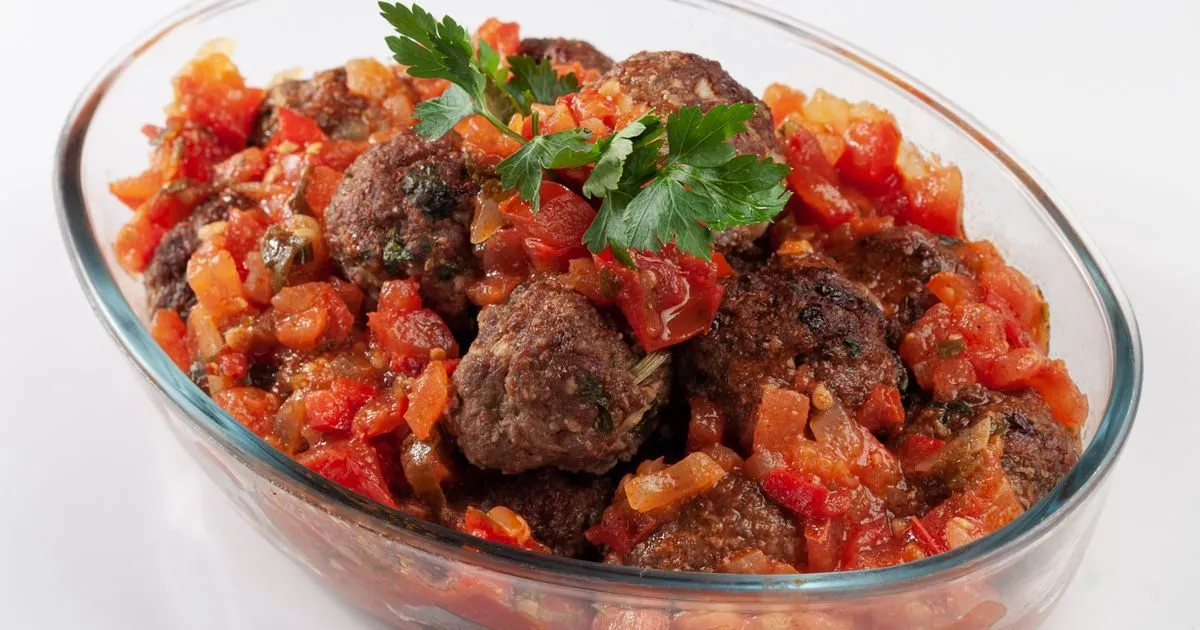
Kofte yahni is the stew version of Turkish meatballs - and it is exactly the kind of one-pot dinner Turkish home cooks rely on all week. Small, cumin-scented meatballs get a quick sear, then simmer with potatoes, carrots, and peas in a glossy tomato sauce until everything is fork-tender. It is hearty, saucy, and comes together in under an hour.
The word “yahni” means stew, and the name covers dozens of Turkish braises. Kofte yahni simply means meatballs in a stew. What makes this version different from the better-known sulu kofte (a soupy tomato broth with poached meatballs) is the sear: the kofte are browned first, which builds a deeper, roasted flavor into the sauce, and the liquid is thicker - more of a braise than a soup.
This recipe stays close to the classic home version: ground beef with breadcrumbs and grated onion, pan-fried, then finished in a tomato and paprika sauce with root vegetables. Serve it over rice pilaf with a glass of ayran and you have a complete Turkish weeknight dinner.
How to Make Kofte Yahni
- In a large bowl, combine the ground beef, grated onion, breadcrumbs, egg, chopped parsley, salt, cumin, pepper, and chilli (if using). Knead gently just until combined, about 1 to 2 minutes.
- Roll the mixture into walnut-sized meatballs, about 1 inch (2.5 cm) across. You should get 24 to 30.
- Heat 2 tablespoons of the oil in a Dutch oven or heavy pot over medium-high heat. Brown in batches for 4 to 5 minutes per side until browned all over, then transfer to a plate.
- Lower the heat to medium, add the remaining oil and the diced onion. Cook 5 to 6 minutes until soft and lightly golden. Add the garlic and cook 1 minute until fragrant.
- Stir in the tomato paste, paprika, and chilli, and cook 1 to 2 minutes until the paste darkens and smells sweet.
- Pour in the broth and scrape up the browned bits. Add the potatoes, carrots, and salt. Bring to a boil, then reduce to a simmer and cook 10 minutes.
- Return the meatballs to the pot, add the peas, and simmer gently for 15 to 20 minutes until the potatoes are tender and the meatballs are cooked through.
- Taste and season with more salt. Garnish with fresh parsley and serve hot with rice pilaf or crusty bread.
Ingredients
For the meatballs:
- 1 lb (450 g) ground beef, 20% fat
- 1 small onion, finely grated
- 1/3 cup (40 g) plain breadcrumbs
- 1 large egg
- 2 tbsp chopped fresh parsley
- 1 tsp kosher salt
- 1/2 tsp ground cumin
- 1/2 tsp black pepper
- 1/4 tsp ground chilli (pul biber), optional
For the stew:
- 3 tbsp olive oil or vegetable oil, divided
- 1 large onion, diced
- 2 cloves garlic, minced
- 2 tbsp tomato paste
- 1 tsp sweet paprika
- 1/2 tsp ground chilli (pul biber)
- 3 cups (720 ml) beef or chicken broth, or water
- 2 medium potatoes (about 1 lb / 450 g), peeled and cut into 1-inch cubes
- 2 medium carrots, peeled and cut into 1/2-inch rounds
- 1 cup (150 g) frozen peas
- 1/2 tsp kosher salt, plus more to taste
- Fresh parsley, for garnish
What Is Kofte Yahni?
Kofte yahni (also written kofte yahnisi) is a Turkish meatball stew built on two elements: pan-fried kofte and a tomato-based sauce. The meatballs themselves are the same family as the ones used across Turkish cooking - ground beef or lamb bound with breadcrumbs, egg, and grated onion, seasoned with cumin, black pepper, and often a pinch of chilli. What sets yahni apart is the cooking method: the kofte are browned first, then braised slowly with vegetables so the sauce thickens and the flavors meld.
Every Turkish family has its own version. Some add potatoes only, some add carrots and peas, and the chickpea version - nohutlu kofte yahni - swaps in cooked chickpeas for part of the vegetables. The common thread is a rich, spoonable sauce that begs for rice or bread to soak it up.
Kofte Yahni vs Sulu Kofte vs Izmir Kofte
Turkish cooks make several dishes that look similar to kofte yahni, and it helps to know the difference before you pick one.
| Dish | Meatballs | Sauce | Method |
|---|---|---|---|
| Kofte yahni | Pan-fried first | Thick tomato stew with potatoes, carrots, peas | Simmered on the stove |
| Sulu kofte | Poached raw, not fried | Thin tomato broth with potatoes and carrots | Soupy, more liquid |
| Izmir kofte | Baked with potatoes | Tomato sauce over the top | Baked in the oven |
Sulu kofte is the soupier cousin - the meatballs go in uncooked and poach gently in a light broth. Izmir kofte is the oven version, where kofte bake on a bed of potatoes under tomato sauce. Kofte yahni sits in the middle: browned meatballs, a thicker sauce, and one pot on the stove. If you love one, the others are worth trying too, like this Turkish meatball soup (sulu kofte) or the Izmir kofte baked with potatoes.
Tips for the Best Kofte Yahni
- Use 20% fat ground beef. Lean beef makes dry, crumbly kofte. Lamb or a beef-lamb blend works beautifully and adds richness.
- Grate the onion, then squeeze it. Grated onion adds moisture and sweetness, but too much liquid makes the meatballs loose. Squeeze the shreds lightly in your fist before mixing. This is the same trick used in how to make meatballs generally.
- Don’t skip the sear. Browning the kofte is what separates yahni from sulu kofte. The browned crust dissolves into the sauce as it simmers and gives the stew its depth.
- Scrape the bottom of the pot. After the meatballs come out, the browned bits stuck to the pot are pure flavor. The broth lifts them off as it comes to a boil.
- Keep it at a gentle simmer. A rolling boil can break the kofte apart. Once the meatballs are back in, lower the heat so the surface barely trembles.
- Let it rest. Kofte yahni tastes even better the next day. If you have time, make it ahead and reheat gently.
Variations
- Nohutlu kofte yahni (with chickpeas). Add 1 1/2 cups of cooked chickpeas with the meatballs. The chickpeas soak up the sauce and make the stew extra hearty.
- Lamb kofte. Swap the beef for ground lamb and add a pinch of dried mint to the meatball mixture. This is the classic pairing in southeastern Turkey.
- Spicier version. Use a full teaspoon of pul biber (Turkish chilli flakes) or a minced fresh chilli in the sauce for more heat.
- Gluten-free. Replace the breadcrumbs with the same amount of fine bulgur, soaked in warm water for 10 minutes and squeezed dry. The bulgur binds the meatballs the same way.
- More vegetables. Add zucchini chunks, green beans, or bell pepper with the potatoes. Frozen mixed vegetables work in a pinch.
What to Serve with Kofte Yahni
Kofte yahni is saucy by design, so it pairs with something to soak up the tomato sauce:
- Rice pilaf - the classic Turkish side. Buttered or plain, it is the default accompaniment.
- Bulgur pilaf - a nuttier, more traditional alternative to rice.
- Crusty bread or pide - for dragging through the sauce.
- Ayran - the salty yogurt drink that cuts through the rich stew.
- Cacik or a simple salad - a cool, cucumber-yogurt side balances the tomatoes.
For more Turkish favorites, browse the full collection of Turkish meatball recipes.
Storage and Reheating
Kofte yahni keeps well and actually improves overnight as the flavors meld. Store it in an airtight container in the fridge for up to 4 days. Reheat gently over medium-low heat, adding a splash of broth or water if the sauce has thickened too much.
It also freezes beautifully. Cool the stew completely, then portion it into freezer-safe containers. It keeps for up to 3 months. Thaw overnight in the fridge and reheat gently, stirring occasionally.
FAQ
What does yahni mean in Turkish? Yahni is the Turkish word for stew - a dish of meat simmered slowly in a sauce with vegetables. Kofte yahni therefore means meatball stew. The term covers many braises across Turkish and Balkan cooking, all sharing the same slow-simmered, saucy style.
Can I make kofte yahni without frying the meatballs? You can, but you will get a dish closer to sulu kofte than yahni. The sear adds flavor to both the meatballs and the sauce, and it helps the kofte hold their shape during the simmer. If you want to skip it, brown them in the oven at 400 F for 12 to 15 minutes instead.
How do I keep the meatballs from falling apart? Use enough binder - the egg and breadcrumbs do that job - and don’t overwork the mixture, which makes it crumbly instead of cohesive. Squeeze the grated onion dry so the mixture is not too wet, and keep the stew at a gentle simmer rather than a hard boil.
Is kofte yahni spicy? Traditionally it is mildly spiced, not hot. The pul biber adds warmth and color rather than serious heat. For a genuinely spicy version, increase the chilli or add a minced fresh chilli to the sauce. You can also leave the chilli out entirely for a family-friendly stew.
Can I use ground turkey or chicken? Yes. Poultry versions work, though the meatballs will be softer and drier than beef. Add a tablespoon of olive oil to the mixture and handle them gently. They will need a little more care when browning so they don’t stick or fall apart.
What is the difference between kofte yahni and kofta curry? Kofte yahni is Turkish - cumin, paprika, and tomato, served with rice or bread. Kofta curry is South Asian - a spiced curry sauce with garam masala, ginger, and often yogurt or coconut, like this Indian kofta curry. The meatballs are similar; the sauces are worlds apart.