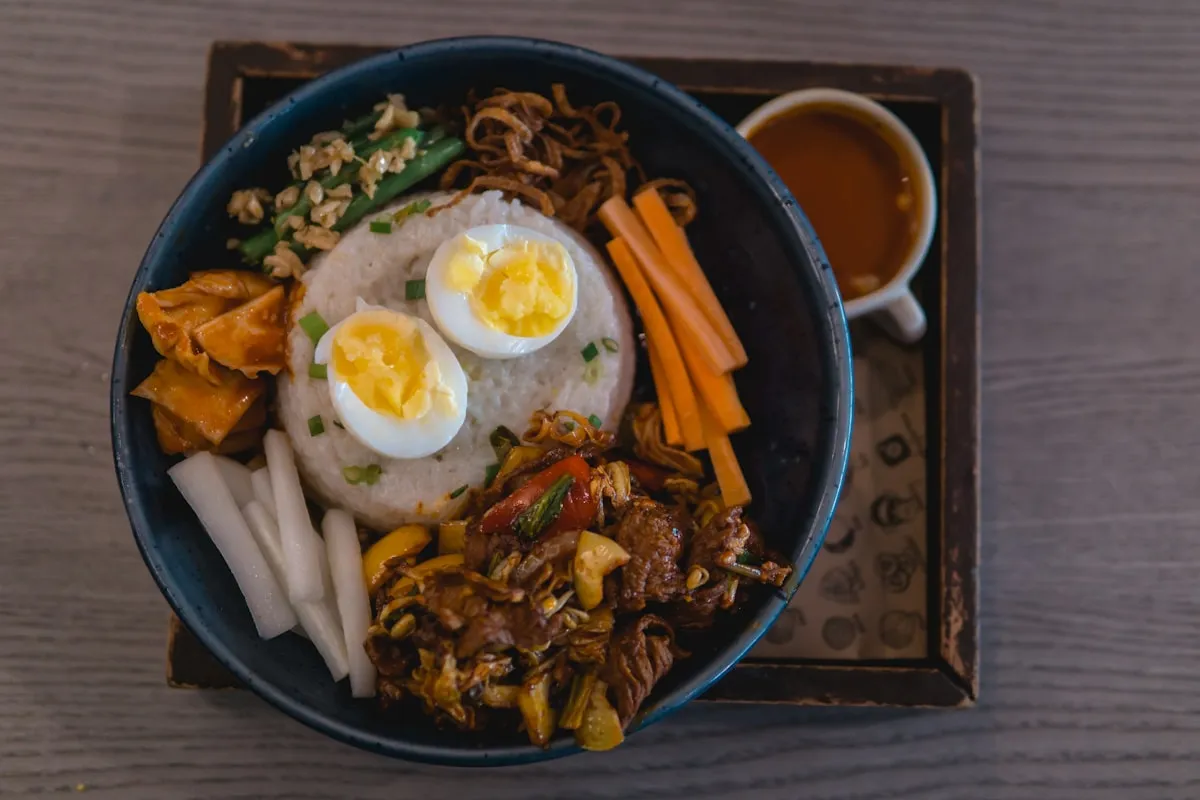
Korean meatball bibimbap turns two Korean comfort foods - gochujang-spiced meatballs and bibimbap - into a single 35-minute rice bowl. Juicy beef meatballs sit on a bed of short-grain rice, surrounded by crisp-tender vegetables and topped with a runny fried egg. A spicy-sweet bibimbap sauce ties everything together.
Bibimbap is one of Korea’s most iconic dishes - a composed rice bowl where each ingredient sits in its own section before you mix it all together. The word literally means “mixed rice.” This version replaces the traditional bulgogi beef with gochujang-seasoned meatballs that brown in a skillet in about 12 minutes. The result is faster, easier, and just as satisfying.
The dish works because of contrast - the soft rice, the seared meatballs, the crunch of fresh vegetables, the richness of a runny egg yolk, and the slow burn of gochujang sauce. If you enjoy Korean flavors, try Korean bulgogi meatballs or Korean meatball japchae next.
Key Takeaways
- Use 80/20 ground beef. Lean beef makes dry, crumbly meatballs. The fat keeps them juicy through the sear and hold.
- Gochujang goes in the meat and the sauce. A small amount in the meatball builds background heat; the main hit is in the bibimbap sauce drizzled over the bowl.
- Stir-fry vegetables until crisp-tender, not soft. They should retain some bite. They continue cooking when placed on hot rice.
- Fry the egg sunny-side up. The runny yolk acts as a creamy sauce when you break it over the hot bowl.
- Short-grain rice matters. Its sticky, chewy texture holds the sauce and keeps the bowl together when you mix.
How to Make Korean Meatball Bibimbap
- Make the meatball mixture. In a large bowl, stir the panko and 2 tbsp water together. Let it sit for 5 minutes until the liquid is absorbed. Add the ground beef, egg, minced garlic, soy sauce, sesame oil, black pepper, and 1 tbsp gochujang. Mix gently with your hands until just combined. Do not overmix.
- Shape and brown the meatballs. Roll the mixture into 16 meatballs, about 1.5 inches wide. Heat 1 tbsp vegetable oil in a large skillet over medium-high heat. Brown the meatballs in batches for 3 to 4 minutes per side until browned and cooked through. Transfer to a plate.
- Stir-fry the vegetables. In the same skillet, add 1 tbsp oil. Stir-fry the julienned carrot, sliced zucchini, and shiitake mushrooms for 2 to 3 minutes until crisp-tender. Add the spinach and cook 1 minute until wilted. Transfer to a plate.
- Fry the eggs. In the same skillet, fry the eggs sunny-side up for 2 to 3 minutes until the whites set but the yolk stays runny.
- Make the bibimbap sauce. Whisk the gochujang, toasted sesame oil, rice vinegar, and sugar together in a small bowl until smooth.
- Assemble and serve. Divide the rice among 4 bowls. Arrange the meatballs, stir-fried vegetables, and a fried egg on top of each bowl. Drizzle with bibimbap sauce. Sprinkle with sesame seeds and scallions. Serve with kimchi on the side.
Ingredients
For the meatballs:
- 1 lb (450 g) ground beef, 80/20
- 1/3 cup panko breadcrumbs
- 1 large egg
- 2 cloves garlic, minced
- 1 tbsp soy sauce
- 1 tsp sesame oil
- 1/2 tsp black pepper
- 1 tbsp gochujang (Korean chili paste)
For the stir-fried vegetables:
- 1 tbsp vegetable oil
- 1 medium carrot, julienned
- 1 zucchini, halved and sliced
- 4 oz (115 g) fresh shiitake mushrooms, sliced
- 2 cups (60 g) fresh spinach
For the bibimbap sauce:
- 3 tbsp gochujang (Korean chili paste)
- 1 tbsp toasted sesame oil
- 1 tbsp rice vinegar
- 1 tsp sugar
To serve:
- 4 cups cooked short-grain rice
- 4 large eggs
- Toasted sesame seeds
- Sliced scallions
- Kimchi
What Is Bibimbap?
Bibimbap (비빔밥) is a Korean rice bowl topped with vegetables, meat, egg, and gochujang sauce. The name comes from bibida (to mix) and bap (rice). It originated as a way to use up leftover banchan (side dishes) and has become one of Korea’s most famous dishes worldwide.
The dish is all about balance - each topping occupies its own section of the bowl before you stir everything together with a spoon. The combination of warm rice, seared protein, fresh vegetables, and spicy sauce creates a harmony of textures and flavors that defines Korean home cooking.
Tips for the Best Meatball Bibimbap
The panade matters. Soaking panko in water before mixing creates a paste that keeps meatballs tender. The same technique works for Korean bulgogi meatballs and Korean gochujang meatballs. Without it, the meatballs turn dense and dry.
Cook vegetables separately. Each vegetable has a different cooking time. Carrots and mushrooms need 2 to 3 minutes; spinach wilts in 1 minute. Cooking them together means either undercooked carrots or mushy spinach.
Use a cold skillet for the egg. Starting eggs in a cold skillet with a thin layer of oil prevents sticking and gives you control over the yolk. Medium-low heat for 2 to 3 minutes sets the whites while keeping the yolk runny.
Keep the sauce on the side for kids. The bibimbap sauce is spicy. Serve it in a small bowl so everyone can add their own amount.
Variations
- Chicken meatball bibimbap: Swap the beef for ground chicken. Add 1 tsp ginger and 2 chopped scallions to the mixture for extra flavor.
- Tofu bibimbap (vegetarian): Replace the meatballs with crumbled firm tofu sautéed with gochujang and garlic. Press the tofu for 15 minutes first to remove excess moisture.
- Bulgogi-style: Marinate thin slices of beef in soy sauce, sugar, sesame oil, and garlic for 30 minutes, then stir-fry instead of using meatballs.
- Dolsot bibimbap: Use a hot stone bowl (dolsot) to create a crispy rice crust on the bottom. Heat the bowl on the stove for 5 minutes before adding rice.
Storage and Meal Prep
- Fridge: Store meatballs, vegetables, and rice in separate airtight containers for up to 4 days. Keep the sauce in a small jar.
- Reheat: Microwave the rice and meatballs for 90 seconds. Stir-fry the vegetables in a hot skillet for 1 minute to restore crunch. Fry a fresh egg.
- Freezer: Meatballs freeze well for up to 3 months. Freeze on a baking sheet first, then transfer to a freezer bag. Thaw in the fridge overnight before reheating.
Frequently Asked Questions
What rice is best for bibimbap? Short-grain Korean rice (bap) or Japanese sushi rice works best. Its sticky, chewy texture holds the sauce and keeps the bowl together when you mix. Long-grain rice is too dry and falls apart.
Can I make this ahead for meal prep? Yes. Cook the meatballs, vegetables, and rice separately and store in airtight containers for up to 4 days. Fry a fresh egg when you reheat - the runny yolk is what makes the bowl special.
Is bibimbap spicy? The gochujang sauce has moderate heat. You control the spice level by how much sauce you add. Serve it on the side for people who prefer less heat.
What is the difference between bibimbap and a rice bowl? Bibimbap is specifically a Korean dish with gochujang sauce, stir-fried vegetables, and a fried egg. A general rice bowl can be any cuisine. The mixing tradition and gochujang sauce define bibimbap.
Can I use frozen meatballs? Yes. Bake frozen meatballs at 400F (200C) for 15 to 18 minutes until heated through, then toss with 1 tbsp gochujang before assembling the bowl.
Sources
- Maangchi, “Bibimbap” - https://www.maangchi.com/recipe/bibimbap
- Korean Food Foundation, “Bibimbap” - https://www.korea.net/NewsFocus/Blog/view?tag=koreanfood
- Serious Eats, “The Best Bibimbap Recipe” - https://www.seriouseats.com/bibimbap-korean-mixed-rice-recipe