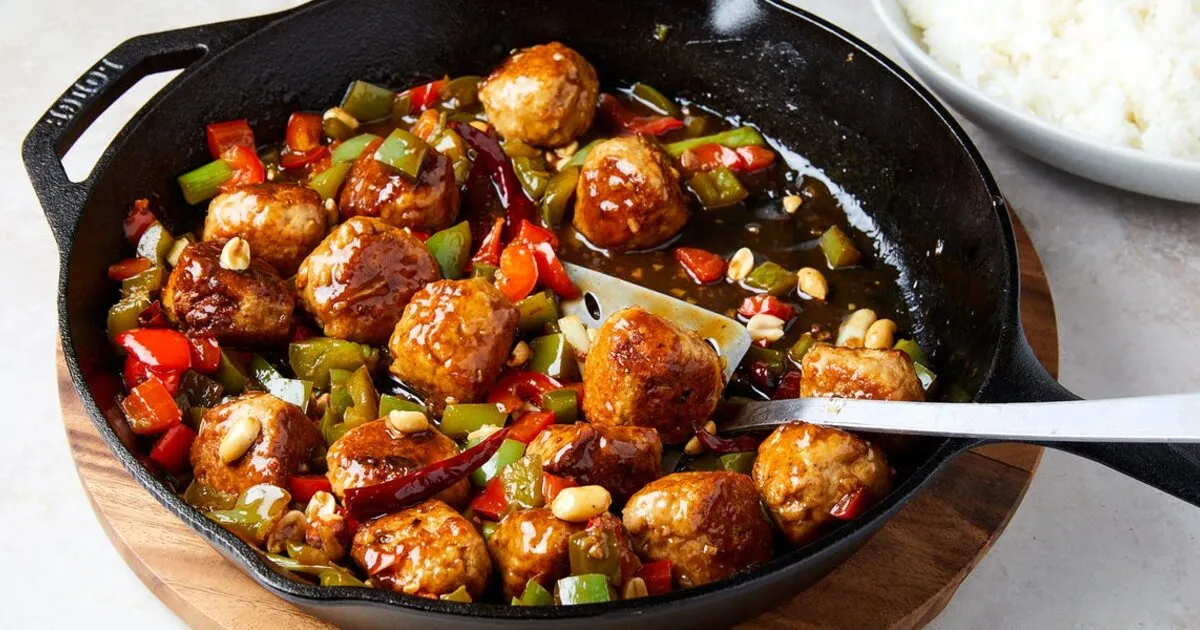
Kung pao meatballs pack the whole takeout classic into one skillet: tender chicken meatballs tossed in a glossy sweet and savory sauce, warmed by dried chilies, lifted by the tingle of Sichuan peppercorns, and finished with roasted peanuts for crunch. It is the flavor of kung pao chicken, minus the wok and the deep frying.
The sauce does the heavy lifting. Soy sauce, rice vinegar, cooking wine, hoisin, and a little brown sugar simmer with cornstarch until it turns lacquer-thick, then coats every ball like a glaze. The peanut topping is not optional here - it is what makes kung pao taste like kung pao, the same way the sesame seeds make General Tso’s version work. Everything comes together in about 30 minutes, one pan, no delivery wait.
How to Make Kung Pao Meatballs
- In a large bowl, combine ground chicken, garlic, ginger, half the scallions, panko, egg, soy sauce, and Sichuan peppercorns. Mix until just combined - overworking makes dense meatballs.
- Roll into 18 to 20 meatballs, about 1 heaping tablespoon each. Heat vegetable oil in a large skillet over medium heat and cook the meatballs for 10 to 12 minutes, turning often, until golden on all sides and cooked through to 165F (74C). Remove to a plate.
- Whisk chicken broth, soy sauce, cooking wine, rice vinegar, hoisin, brown sugar, and cornstarch in a small bowl until the cornstarch dissolves.
- Add bell pepper to the skillet and cook for 4 to 5 minutes until just soft. Add dried chilies, the remaining scallions, and a pinch more ground Sichuan peppercorn. Cook until fragrant, about 2 minutes.
- Stir in the sauce mixture and bring to a simmer. Return the meatballs and cook for 3 to 5 minutes, tossing, until the sauce thickens and coats each ball.
- Remove from heat, stir in the peanuts, and serve over steamed jasmine rice.
Ingredients
- 1 lb (450 g) ground chicken
- 2 cloves garlic, minced
- 2 tsp fresh ginger, grated
- 3 scallions, thinly sliced, divided
- 3/4 cup (75 g) panko breadcrumbs
- 1 large egg, lightly beaten
- 1 tbsp low-sodium soy sauce
- 1/2 tsp freshly ground Sichuan peppercorns
- 2 tbsp vegetable oil, for searing
- 1/2 cup (120 ml) low-sodium chicken broth
- 1/4 cup (60 ml) low-sodium soy sauce
- 2 tbsp Chinese cooking wine or dry sherry
- 2 tbsp rice vinegar
- 1 tbsp hoisin sauce
- 1 tbsp brown sugar
- 1 tbsp cornstarch
- 1 red bell pepper, chopped
- 6 dried red chilies, stemmed
- 1/2 cup (70 g) roasted unsalted peanuts
- Steamed jasmine rice, for serving
Ingredient Notes and Substitutions
- Ground chicken - ground turkey or lean ground beef work with the same cook time. Chicken and turkey cook through fast, so keep the sear at medium heat.
- Sichuan peppercorns - the numbing tingle is what separates kung pao from other takeout glazes. Found in Asian markets and most specialty grocers; if you do not have them, the dish is still good, just missing the signature buzz. Grind them fresh, or crush a small pinch in a mortar.
- Dried chilies - use whole dried chilies, not the ground kind. They perfume the oil and the sauce with warm heat. Remove them before serving if you want a milder bite.
- Chinese cooking wine (Shaoxing) - dry sherry is the common kitchen swap. Skip both and use a splash of water plus a pinch more rice vinegar if needed.
- Peanuts - roasted unsalted peanuts stay crunchy in the sauce. Cashews work too and are the classic swap in many Sichuan restaurants.
What is kung pao sauce made of?
Kung pao sauce is a balance of five flavors: soy sauce for salt and umami, rice vinegar for tang, brown sugar for sweetness, chili for heat, and cornstarch so it clings. Garlic, ginger, and scallion build the aromatic base, and freshly ground Sichuan peppercorns add the numbing layer that makes the dish instantly recognizable. Hoisin is the shortcut many home versions use for the deep, rounded sweetness that mirin or extra sugar would otherwise provide.
Taste the sauce before it goes in the pan. It should be bold and slightly sharp, because the chicken dials the salt down and the rice soaks up the sweetness. If it tastes perfectly balanced on the spoon, it will taste right on the plate.
Kung Pao vs General Tso: What’s Different?
The two Chinese-American takeout classics get mixed up because both are glossy, sweet, and chili-forward. The real difference is the Sichuan peppercorn and the peanuts. General Tso leans on its lacquered dark glaze and crisp coating; kung pao adds the numbing tingle and the crunch of roasted peanuts on top of a sweeter, vinegary sauce. Our General Tso meatballs lean on hoisin for depth, while this recipe keeps the sauce brighter and sharper.
Variations Worth Trying
- Beef version - swap in lean ground beef, sear a little longer (about 14 minutes), and use the same sauce. The richer meat stands up to the numbing spice even better than chicken.
- Crockpot version - brown the meatballs, whisk the sauce into a slow cooker with the bell pepper, and cook on low for 3 to 4 hours. Add the peanuts in the last 10 minutes so they stay crunchy. This follows the same pattern as our Mongolian meatballs done in a crock.
- Keto version - skip the panko or use crushed pork rinds, and replace the brown sugar with a sugar-free sweetener or a little extra hoisin. The sauce stays thick and glossy.
- Extra vegetables - sliced zucchini or broccoli florets cook right in with the bell pepper. Add them with the pepper so everything finishes together.
What to Serve with Kung Pao Meatballs
Steamed jasmine rice is the classic partner - the sauce is meant to be sopped up. Egg noodles or fried rice work just as well. For a party appetizer, skip the rice and serve the meatballs with toothpicks straight from the skillet; they hold their glossy coating for a long time and stay warm for over an hour at room temperature.
If you are building meal prep bowls, this recipe fits right into the pattern of our meal prep meatball collection - make the sauce and meatballs separately if you can, then combine at serving time so the chicken stays tender instead of soaking soft. It also joins the full line-up of takeout-style recipes in our Chinese meatball collection.
Storage and Reheating
Store leftovers in an airtight container in the fridge for up to 4 days. Reheat in a skillet over medium heat with a splash of water or broth to loosen the sauce, or use 30-second microwave bursts. The sauce keeps its cling; the peanuts soften over time, so top with a fresh handful before serving.
The meatballs freeze well on their own for up to 3 months. Freeze them after searing, before the sauce; thaw overnight in the fridge and finish in the sauce. Sauce made ahead keeps in the fridge for a week.
FAQ
Are kung pao meatballs spicy? Mild to medium, depending on the chilies. Whole dried chilies flavor the sauce without dumping heat into every bite. Slice them open or add a spoonful of chili crisp for real fire, or remove them before serving for a very mild plate.
Can I use ground beef instead of chicken? Yes. Lean ground beef works with the same sauce; sear it a couple of minutes longer since beef takes a bit more time to cook through. The beef version pairs especially well with the Sichuan peppercorns.
What is the numbing ingredient in kung pao? Sichuan peppercorns, which are not actually peppers - they are the dried husks of a prickly ash tree. They create a tingly, slightly numb sensation on the tongue that is the signature of the dish. Grind them fresh for the strongest effect.
Can I make this without Sichuan peppercorns? Yes, though the flavor will be closer to a sweet and sour glaze. Add an extra pinch of red pepper flakes or chili crisp to keep some heat. It is still good kung pao-adjacent food, just without the buzz.
How do I keep the sauce from getting too thick? The cornstarch thickens the sauce in about 3 minutes of simmering. If it goes too far, splash in broth or water a tablespoon at a time. The sauce is done when it coats the back of a spoon.
Should the peanuts be added before or after cooking? After. If peanuts simmer in the sauce for more than a few minutes they lose their crunch. Stir them in right before serving, or sprinkle them on top of each portion.
Sources
- Kung Pao Chicken Meatballs Recipe | Delish, sauce ratios and technique reference
- Kung Pao Chicken Meatballs | Inquiring Chef, variation notes and Sichuan peppercorn guidance
- Kung Pao chicken | Wikipedia, history, naming, and flavor profile