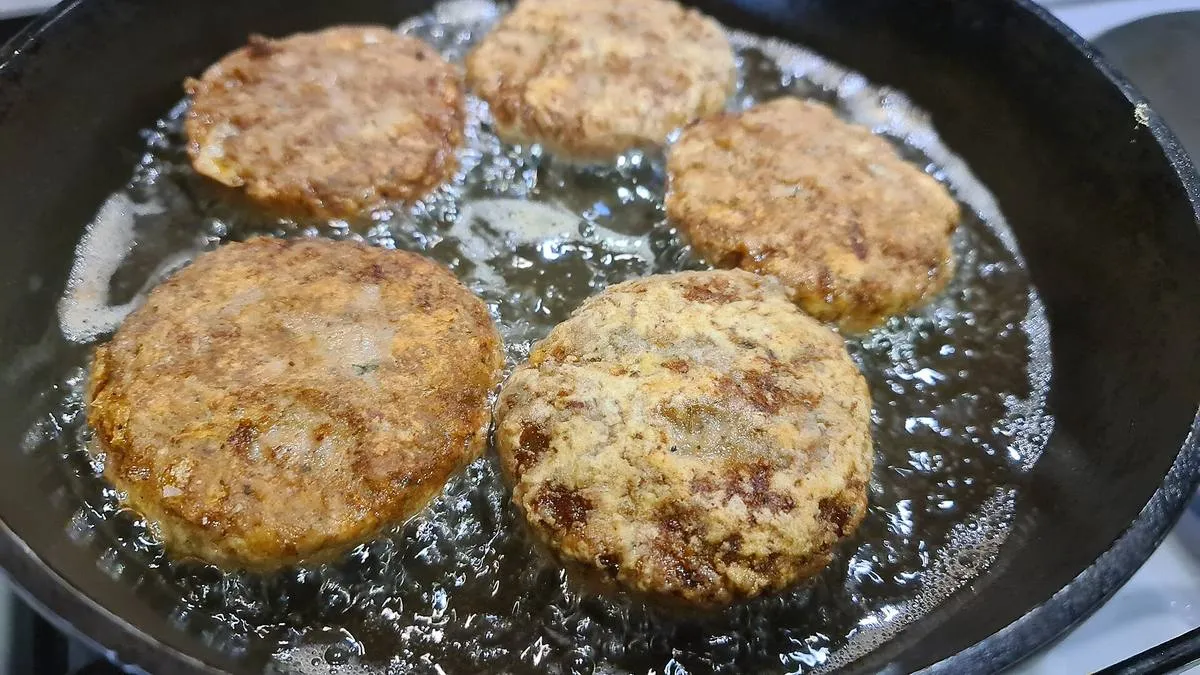
Kjuftinja are the Macedonian take on the meatball: small, fried, and seasoned with oregano and a whisper of dried mint. They show up at family lunches, holiday tables, and as a savory snack with a cold drink. Think of them as the Balkan cousin of Greek keftedes, but with a softer, bread-enriched center.
This version keeps things simple. No rice to cook through, no long simmer. You mix, you roll, you fry, and dinner is on the table in about 35 minutes. The result is a crisp golden shell around a juicy, herb-scented middle.
Prep time: 20 minutes. Cook time: 15 minutes. Servings: 4 (about 20 meatballs).
Key Takeaways
- Bread is the secret. Soaked bread, not breadcrumbs, gives kjuftinja their tender bite. Squeeze it dry so the mixture stays firm.
- Mint makes it Macedonian. Dried mint sets this apart from its Balkan neighbors. Use it lightly so it seasons without taking over.
- The egg white trick. Folding in a foamy beaten egg white stops the beef from gluing to your hands while you roll.
- Small and fried, not simmered. Unlike Croatian or Bosnian ćufte, kjuftinja are pan-fried and eaten right away, though they also take well to tomato sauce.
- Mash and lemon win. Creamy mashed potatoes and a squeeze of lemon balance the richness better than anything else.
How to Make Macedonian Meatballs (Kjuftinja)
- Soak the bread. Place the bread slices in a small bowl and pour the milk over them. Let sit 10 to 15 minutes, then squeeze out the excess liquid.
- Mix the meat. In a large bowl, combine the ground beef, soaked bread, grated onion, garlic, egg yolk, oregano, mint, salt, and pepper. Knead with your hands until the mixture is evenly mixed.
- Beat the egg white. In a separate bowl, beat the egg white until foamy, then fold it into the meat. This keeps the kjuftinja from sticking to your palms as you shape them.
- Rest the mixture. Cover and chill for 15 to 30 minutes. This firms the fat so the meatballs hold their round shape in the pan.
- Shape and dust. Roll the mixture into 20 small balls about 1 inch across. Spread the flour on a plate and roll each ball to coat, shaking off the extra.
- Fry in batches. Heat the oil in a heavy skillet over medium-high heat. Add the meatballs in batches and fry 3 to 4 minutes per side until deep golden and cooked through. Drain on paper towels.
- Serve. Pile the kjuftinja over mashed potatoes with a squeeze of lemon, or simmer them briefly in tomato sauce. Sprinkle with parsley.
Ingredients
- 1 lb (450 g) ground beef (or half beef, half pork)
- 2 slices white bread, crusts removed
- 1/4 cup (60 ml) whole milk
- 1/2 cup grated onion (about 1 medium onion)
- 2 cloves garlic, minced
- 1 large egg, separated (yolk into the mix, white beaten)
- 1 tsp dried oregano
- 1/2 tsp dried mint
- 3/4 tsp salt
- 1/4 tsp black pepper
- 1/4 cup (35 g) all-purpose flour, for dusting
- 1/2 cup vegetable oil, for frying
- Mashed potatoes, lemon wedges, or tomato sauce, for serving
Tips for the best kjuftinja
Grate the onion on the fine side of a box grater and let it sit a minute, then add the juice along with the pulp. That little bit of onion liquid seasons the beef from the inside. If you prefer a coarser texture, mince the onion by hand instead.
Keep your hands slightly wet while rolling. Combined with the foamy egg white, this makes shaping 20 tiny meatballs quick and clean. Work in a steady rhythm: roll a few, drop them in the flour, roll them again, and set them on a tray.
Test the oil before the full batch. Drop in one kjuftinja; it should sizzle right away and brown in roughly 3 minutes per side. If it browns too fast and stays raw inside, lower the heat.
Tomato sauce variation
Many Macedonian home cooks skip the fry-and-serve step and instead braise the kjuftinja in a quick tomato sauce. After shaping and dusting the meatballs, soften a diced onion in oil, stir in a spoon of flour, then add crushed tomatoes, a pinch of paprika, and a cup of water. Slide the meatballs in, cover, and simmer 20 to 25 minutes until the sauce thickens and the centers are cooked.
This braised version lands closer to Croatian ćufte or Bosnian ćufte, both of which simmer their meatballs in tomato from the start. The fried version here is faster and a little lighter.
What to serve with Macedonian meatballs
Mashed potatoes are the standard partner, and for good reason: the cream soaks up the meaty juices. Roasted potatoes or a scoop of rice work too. A wedge of lemon on the side brightens every bite.
For a fuller Balkan spread, pair the kjuftinja with shopska salad (tomato, cucumber, and white cheese) or a side of Bulgarian kufteta, the flat grilled cousin from just south of the border. If you want to stay within one cuisine, Macedonian kebapi makes a great grilled counterpart on the same table. Browse more regional recipes on the Balkan meatballs hub.
FAQ
What is the difference between kjuftinja and cevapi?
Cevapi are finger-length grilled rolls of seasoned meat served in flatbread, while kjuftinja are small round meatballs that are usually fried. Both belong to the same Balkan meat tradition, but cevapi lean on the grill and kjuftinja lean on the skillet. The spice base of beef, onion, and pepper is similar across both.
Can I bake Macedonian meatballs instead of frying?
Yes. Shape and flour the kjuftinja as written, then arrange them on a parchment-lined sheet and bake at 400°F (200°C) for about 15 minutes, turning once. They will be a bit less crisp than the fried version but still juicy. An air fryer at the same temperature for 10 to 12 minutes also works well.
What do you serve with kjuftinja?
Mashed potatoes are the most common side, with a squeeze of lemon to cut the richness. Rice, roasted potatoes, or crusty bread also work. A fresh shopska or cucumber tomato salad balances the fried meat, and a light red wine pairs nicely if you are serving adults.
Can I make the mixture ahead of time?
You can mix and chill the meat up to a day in advance, which actually improves the flavor as the herbs settle in. Shape and fry just before serving so the coating stays crisp. If you shape them ahead, keep them covered in the fridge and let them sit at room temperature for 10 minutes before frying.
Why beat the egg white separately?
A foamy beaten egg white folded in at the end adds air and a slight binding lift without making the beef dense. More practically, it stops the mixture from sticking to your hands while you roll the small balls. The yolk goes in with the meat for richness; the white stays separate until the end.
Sources
- Macedonian Meatballs (Koftinja) - Macedonian Cuisine
- Kjoftinja (Meatballs) - TV Macedonia
- Macedonian Meatballs Recipe - Kjufte - recipe.food