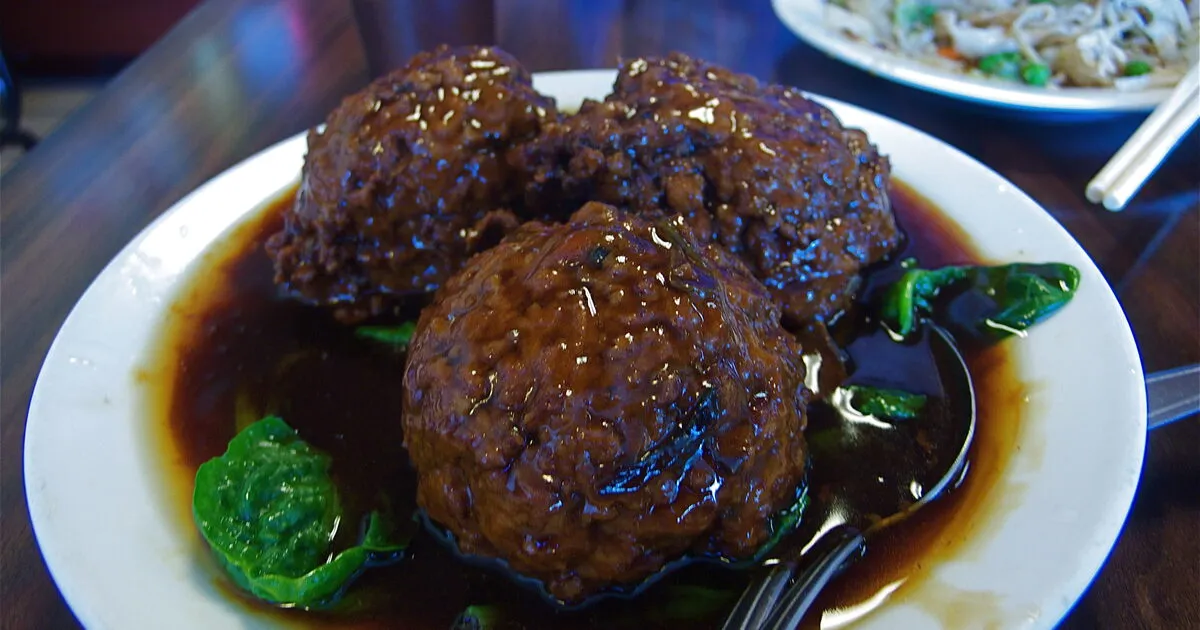
Sichuan meatballs take everything you love about mapo tofu and put it on a firm, juicy meatball instead of soft tofu. Tender pork balls brown in the pan, then simmer in the signature mapo sauce: scarlet doubanjiang chili paste fried until the oil turns red, fermented black beans, garlic, ginger, and a finish of toasted, ground Sichuan peppercorns that makes your lips tingle.
Mapo means “pockmarked old lady” - the nickname of Chen Mapo, a Chengdu cook from the 1860s who sold the dish out of her restaurant and gave it her name. The character of Sichuan cooking is ma la: ma for the numbing citrus pop of Sichuan peppercorns (huajiao), la for the fire of chilies. This recipe keeps both dials high but steps the heat to your taste with the chili you add.
If you can fry doubanjiang and stir a cornstarch slurry, you can make this. Meatballs simmer in the same pan as the sauce, so dinner is one skillet plus a pot of rice, and the whole thing is on the table in 30 minutes.
Key Takeaways
- The sauce is mapo tofu’s, the protein is meatballs: doubanjiang, fermented black beans, chili, and Sichuan peppercorn powder.
- Brown the meatballs on two sides first, then simmer them in the sauce 10 to 12 minutes so they soak up the red oil.
- Fry the doubanjiang until the oil turns deep red - this single step is where the dish gets its color.
- Grind toasted Sichuan peppercorns fresh; ground from a jar loses the numbing tingle fast.
- Serve over steamed rice so the glossy sauce has somewhere to go.
How to Make Sichuan Mapo Meatballs
- In a bowl, combine the ground pork, cornstarch, Shaoxing wine, soy sauce, sesame oil, grated ginger, white pepper, and salt. Stir in one direction until the mixture turns sticky, about 2 minutes, then form 16 to 18 meatballs.
- Heat the neutral oil in a wide skillet over medium-high heat. Brown the meatballs in batches, 3 to 4 minutes per side, until deeply browned. Transfer to a plate; they finish cooking in the sauce.
- Lower the heat to medium and add the doubanjiang to the same pan. Fry it in the oil, stirring, 1 to 2 minutes until the oil turns red and the paste smells toasted.
- Stir in the fermented black beans, garlic, grated ginger, and chili. Cook 30 seconds until aromatic.
- Pour in the chicken stock and stir in the sugar, scraping up the browned bits. Return the meatballs to the pan and bring to a simmer. Cook 10 to 12 minutes, turning once, until the meatballs are cooked through.
- Add half the cornstarch slurry and simmer 30 seconds. Add the rest and simmer 1 to 2 minutes until the sauce thickens and coats the meatballs.
- Stir in half the toasted and ground Sichuan peppercorn powder and half the scallions. Serve over steamed rice, finished with the remaining peppercorn powder and scallions.
Ingredients
For the meatballs:
- 1 lb (450 g) ground pork, or half pork half ground beef
- 2 tbsp cornstarch
- 1 tbsp Shaoxing wine (optional)
- 2 tsp soy sauce
- 1 tsp toasted sesame oil
- 1 tsp grated ginger
- 1/2 tsp white pepper
- 1/2 tsp kosher salt
For the mapo sauce:
- 1/3 cup (80 ml) neutral oil, such as canola or peanut
- 1 1/2 tbsp Pixian or regular doubanjiang
- 1 heaping tbsp fermented black beans (douchi), rinsed and chopped
- 3 cloves garlic, minced
- 1 tbsp grated ginger
- 1 serrano or Thai chili, thinly sliced (optional)
- 1 1/2 cups (360 ml) chicken stock, or low-sodium stock plus water
- 1 tsp sugar
- 2 tsp cornstarch mixed with 5 tsp cold water
- 1 tsp Sichuan peppercorns, toasted and ground
- 3 scallions, sliced
- Steamed white rice, for serving
What Makes This Mapo Style
Mapo style is a sauce before it is a dish. The core is Pixian doubanjiang, a fermented broad bean chili paste from Sichuan that gives the sauce its brick-red color and deep umami. On top of that go fermented black beans (douchi), which add a salty, slightly funky savor, and a cornstarch slurry that turns the mixture glossy and gives it body.
The final signature is the Sichuan peppercorn. Unlike black pepper, it is not really hot; it produces a buzzing, numbing tingle on the tongue that Chinese cooks call ma. Toasted and ground fresh, it has a citrusy, floral perfume that fades quickly after grinding, which is why this recipe has you grind it yourself.
There are other “Sichuan meatball” styles - some recipes braise meatballs in a clear broth with bok choy, others use a doubanjiang glaze with no slurry. This recipe follows the mapo flavor profile: thick, oily, glossy, and aggressively seasoned, meant to be eaten spooned over rice with something cold to drink nearby. For a milder braised take on Chinese meatballs, the lion’s head meatballs with napa cabbage are a great contrast.
Meatball Technique Notes
The meatballs here use a cornstarch panade instead of breadcrumbs, which keeps them springy and juicy without any gluten. Stirring the mixture in one direction until it turns sticky builds the bouncy texture Chinese meatballs are known for; the same technique appears in our steamed pork meatballs with water chestnuts, where a light hand and a sticky mix are what separate tender meatballs from dense ones.
The ground pork keeps enough fat to hold up to 10 minutes in the simmering sauce. If you use lean ground turkey or chicken, add one extra teaspoon of sesame oil to the mixture and check doneness at 10 minutes so the meatballs stay moist.
Browning matters here. The seared crust on each meatball not only adds flavor, but the browned bits left in the pan become part of the sauce when you pour in the stock. That is why the recipe has you use the same skillet - no washing, and all that color goes into the final dish.
How to Adjust the Heat
The doubanjiang provides baseline heat; the fresh chili adjusts it to your taste.
- Mild: Use 1 tablespoon doubanjiang, skip the fresh chili, and use 1/2 teaspoon ground Sichuan peppercorn.
- Medium: Follow the recipe as written.
- Hot: Double the fresh chili or add 1 teaspoon of chili flakes or chili crisp with the aromatics.
If you want the cooling side of the same kitchen, the Thai chicken meatballs in sweet chili sauce are mild and glossy - a fun contrast to serve alongside or the next night.
Storage and Reheating
Leftover mapo meatballs keep refrigerated for up to 4 days in a sealed container. The sauce thickens as it sits; loosen it with a splash of water or stock when reheating. Reheat on the stovetop over medium-low heat, stirring gently, or in the microwave in 30-second bursts. The dish freezes well for up to 3 months - thaw overnight in the fridge, then reheat gently.
FAQ
Is this the same as mapo tofu? No - the sauce is the mapo element, but the protein is meatballs instead of soft tofu. Some cooks love a hybrid: simmer halved meatballs with tofu cubes for the last 5 minutes for the best of both.
Can I use beef instead of pork? Yes. Traditional mapo dishes use beef, and a half-pork half-beef blend gives the most balanced flavor. All-beef meatballs turn out slightly firmer; add one extra teaspoon of oil to the meat mixture.
What is doubanjiang and where do I buy it? Doubanjiang is a fermented broad bean and chili paste from Sichuan province. Look for “Pixian doubanjiang” in Asian grocery stores or online - it comes in jars labeled 郫县豆瓣. If you only have a generic chili bean paste, it still works; this recipe is forgiving.
Is Pixian doubanjiang required? No. It is the most authentic version and worth seeking out, but any ferment-style chili bean paste will produce a good sauce. Avoid sweet chili sauce or sriracha - they are not fermented the same way and will change the flavor.
How spicy is this? Medium-hot by Sichuan standards. The heat comes from doubanjiang plus the fresh chili, and the numbing tingle from the Sichuan peppercorns. Remove the chili or dial back the doubanjiang for a milder bowl.
Can I make the meatballs ahead? Yes. Form them up to 1 day ahead and refrigerate on a tray. Bring the sauce to a simmer, add the cold meatballs, and extend the simmer time by 2 to 3 minutes to bring them up to temperature. Freeze uncooked meatballs on a tray for up to 3 months and brown them from frozen, adding 2 extra minutes per side.
Sources
- Mapo Tofu - Wikipedia: https://en.wikipedia.org/wiki/Mapo_tofu
- Authentic Mapo Tofu - China Sichuan Food: https://www.chinasichuanfood.com/mapo-tofu-recipe/
- Sichuan Peppercorn - Omnivore’s Cookbook: https://omnivorescookbook.com/sichuan-peppercorn/
Related Recipes
- Lion’s Head Meatballs (Shi Zi Tou) - Giant braised pork meatballs in napa cabbage and ginger broth
- Chinese Steamed Pork Meatballs with Water Chestnuts - Tender dim sum steamed meatballs, the springy-texture counterpoint
- Korean Gochujang Meatballs - Another bold, glossy Asian sauce on juicy meatballs
- How to Make Meatballs - The Complete Guide - Panade ratios and techniques for every meatball style
- Chinese Meatball Recipes - All of our Chinese-style meatball recipes in one place