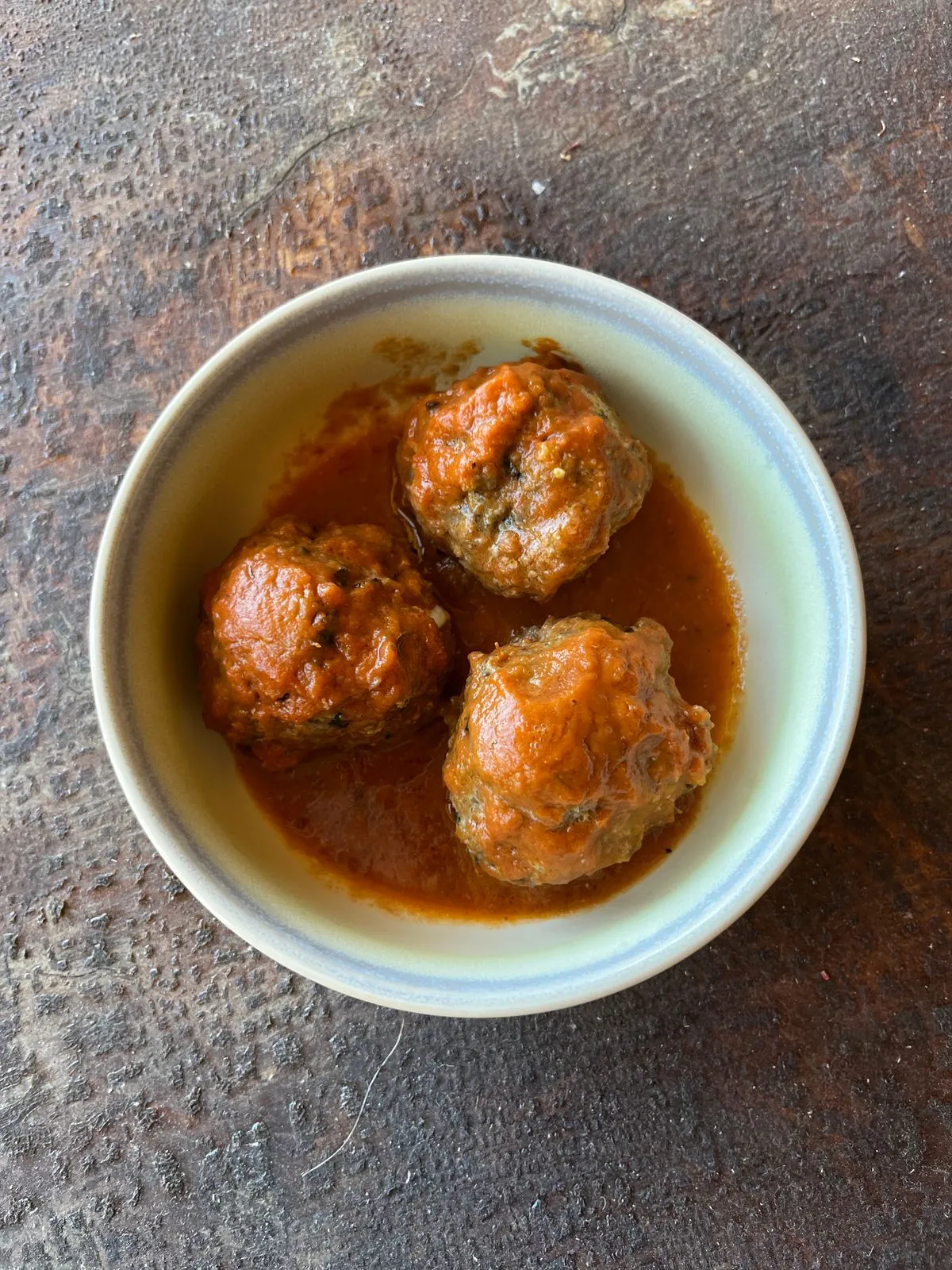
Sudanese kofta is a comfort dish from the banks of the Nile, where spiced ground beef meatballs simmer in a stew that is part tomato, part peanut, and entirely satisfying. The dish reflects Sudan’s position at the crossroads of Arab, African, and Nubian cooking traditions, with warm spices, peanut butter (called dakwa in Sudanese kitchens), and a thick, spoonable sauce that begs for sopping bread.
This is not Italian meatballs. It is not Swedish meatballs. Sudanese kofta is built on cumin and coriander, braised in a peanut-tomato stew that tastes like a bridge between West African groundnut soup and North African kefta. The peanut butter adds a creamy, nutty richness that balances the acidity of the tomatoes and the warmth of the spices.
Key Takeaways
- Peanut butter is the signature. Smooth, unsweetened peanut butter stirred into the broth creates the creamy, nutty base that defines Sudanese kofta stew.
- Cumin and coriander anchor the spice blend. These two warm spices appear in both the meatballs and the stew, creating a layered, aromatic dish.
- Brown the meatballs in batches. Overcrowding causes steaming instead of browning, which means less flavor in the final stew.
- Sweet potatoes are traditional. Cubed sweet potato absorbs the peanut-tomato sauce and adds natural sweetness to balance the savory spices.
- Kisra is the classic pairing. Kisra is a thin, spongy sorghum flatbread used to scoop up the stew, but rice or regular flatbread works too.
How to Make Sudanese Kofta
- Make the meatball mixture. In a large bowl, combine ground beef, egg, breadcrumbs, grated and squeezed dry onion, minced garlic, cumin, coriander, turmeric, salt, and pepper. Mix with your hands for 2 to 3 minutes until the mixture holds together and feels slightly sticky.
- Shape the meatballs. Roll the mixture into 18 meatballs, about 1.5 inches across. Set them aside on a plate.
- Brown the meatballs. Heat 2 tbsp oil in a large heavy pot or Dutch oven over medium-high heat. Brown the meatballs in batches for 2 to 3 minutes per side. They do not need to be cooked through - they will finish in the stew. Transfer to a plate.
- Build the stew base. Reduce heat to medium. Add remaining 1 tbsp oil to the pot. Sauté diced onion for 4 to 5 minutes until softened and translucent.
- Add aromatics. Stir in garlic and ginger. Cook for 1 minute until fragrant.
- Cook the tomato paste. Add tomato paste and cook for 1 to 2 minutes, stirring constantly, until it darkens from bright red to a deeper brick color.
- Add tomatoes. Stir in chopped tomatoes. Cook for 5 to 6 minutes, stirring occasionally, until the tomatoes break down and the sauce thickens.
- Add the peanut broth. Whisk peanut butter into the beef broth until smooth, then pour into the pot and stir to combine.
- Simmer. Bring to a simmer and cook for 10 to 12 minutes until the sauce thickens and the sweet potatoes are tender if using.
- Add the meatballs. Gently place the browned meatballs into the stew. Cover and simmer on low heat for 12 to 15 minutes, turning once halfway through, until the meatballs are cooked through and have absorbed the sauce.
- Finish. Taste and adjust salt. Garnish with fresh cilantro.
- Serve. Plate the stew with kisra, rice, or flatbread.
Ingredients
For the Meatballs
- 1 lb (450 g) ground beef, 80/20
- 1 large egg
- 1/4 cup fine dry breadcrumbs
- 1 small onion, finely grated and squeezed dry
- 3 cloves garlic, minced
- 1 tsp ground cumin
- 1 tsp ground coriander
- 1/2 tsp ground turmeric
- 1/2 tsp kosher salt
- 1/4 tsp black pepper
For the Peanut Tomato Stew
- 3 tbsp vegetable oil, divided
- 1 large onion, diced
- 3 cloves garlic, minced
- 1 tbsp fresh ginger, grated
- 2 tbsp tomato paste
- 3 large tomatoes, peeled and chopped (or one 14 oz can crushed tomatoes)
- 1/2 cup natural peanut butter (smooth, unsweetened)
- 1 cup beef broth or water
- 1 medium sweet potato, peeled and cut into 1-inch cubes (optional)
- Salt to taste
- Fresh cilantro for garnish
For Serving
- Kisra, rice, or flatbread
What Makes Sudanese Kofta Different
Sudanese kofta sits at the intersection of several African and Middle Eastern meatball traditions. The name comes from the Arabic kofta, which spread across the Muslim world along trade routes. In Sudan, it took on a local character shaped by available ingredients and cooking techniques.
The peanut-tomato base. Sudanese cooking uses peanut butter (dakwa) in ways that parallel West African groundnut soup but with a distinctly Sudanese twist. The peanut butter is whisked into the broth and simmered until it melds with the tomatoes, creating a sauce that is creamy without being heavy. This is different from Nigerian groundnut soup, which is brothier, and from West African mafe, which uses whole peanuts.
The spice blend. Cumin and coriander are the backbone of Sudanese kofta seasoning. These same spices appear in Egyptian kefta and Ethiopian berbere, but Sudan uses them in a simpler, more direct way without the complexity of berbere or the heat of Egyptian chili. Turmeric adds warmth and a golden color to the sauce.
The meatball technique. Sudanese kofta is typically shaped into slightly elongated ovals rather than perfect spheres. The shape helps the meatballs hold more sauce and cook evenly during the long simmer. Some Sudanese cooks form the kofta into small cylinders, almost like mini meatloaves.
The Role of Peanut Butter in Sudanese Cooking
Peanut butter is a staple ingredient in Sudanese kitchens, used in stews, salads, and sauces. The most common preparation is salatat dakwa, a peanut butter salad served as a side dish. In kofta stew, the peanut butter serves three purposes:
- Creaminess. It thickens the sauce without flour or cream.
- Flavor depth. The roasted peanut flavor adds a nutty sweetness that balances the acidity of tomatoes.
- Protein and fat. Peanut butter adds richness and makes the stew more filling, which is important in a dish traditionally served with starchy bread.
Use natural peanut butter. The kind with just peanuts and salt, no added sugar or hydrogenated oils. Regular Jif or Skippy works in a pinch, but the added sugar changes the flavor balance.
What to Serve with Sudanese Kofta
- Kisra: The classic Sudanese pairing. Kisra is a thin, spongy flatbread made from fermented sorghum batter. It is cooked on a griddle like a crepe and torn into pieces for scooping up the stew.
- White rice: Plain steamed rice soaks up the peanut-tomato sauce well.
- Flatbread: Pita, naan, or any soft flatbread works for scooping.
- Rice and beans: A common Sudanese side that turns the meal into a complete protein.
Variations
Chicken kofta stew: Swap the ground beef for ground chicken or turkey. Reduce the brown time to 1 to 2 minutes per side since poultry cooks faster. The spice amounts stay the same.
Without peanut butter: For a lighter version, skip the peanut butter and add a can of drained chickpeas in the last 10 minutes of simmering. The stew will be thinner but still flavorful.
Extra spicy version: Add 1 scotch bonnet pepper, whole, to the stew when you add the tomatoes. It infuses heat without overwhelming the dish. Remove before serving if you want milder heat.
With spinach: Stir in 2 cups of fresh spinach in the last 3 minutes of cooking. The spinach wilts into the peanut-tomato sauce and adds color and nutrition.
Lamb kofta: Replace half the beef with ground lamb for a richer, more aromatic flavor. Lamb is traditional in Sudanese cooking and pairs well with the warm spices.
Storage
Leftover Sudanese kofta keeps well in the refrigerator for up to 4 days. Store the meatballs and stew together in an airtight container. Reheat gently on the stovetop over medium-low heat, adding a splash of water if the sauce has thickened too much.
The stew also freezes well for up to 3 months. Thaw overnight in the refrigerator before reheating.
Frequently Asked Questions
What is kisra? Kisra is a thin, spongy flatbread made from fermented sorghum batter, cooked on a hot griddle like a crepe. It is the staple bread of Sudan, served alongside stews, soups, and grilled meats. The fermentation gives kisra a slightly sour flavor that pairs well with rich, savory stews like kofta. If you cannot find kisra, injera (Ethiopian flatbread) is the closest substitute.
Can I use ground lamb instead of beef? Yes. Ground lamb works well and gives the kofta a richer, slightly gamier flavor. Use the same spice amounts. Lamb has more fat than beef, so you may see more oil rise to the surface during simmering - that is normal and adds flavor to the stew.
What is dakwa? Dakwa is the Sudanese word for peanut butter or peanut paste. In Sudanese cooking, it refers specifically to smooth, unsweetened peanut butter made from roasted ground peanuts. It is used in stews, salads, and sauces throughout Sudanese cuisine.
How is this different from Nigerian groundnut soup? Nigerian groundnut soup (also called peanut soup) uses a thinner, brothier base with leafy greens and a different spice profile. Sudanese kofta stew is thicker, richer, and focuses on the peanut-tomato combination without the greens. The Sudanese version is also typically served with kisra rather than with fufu or pounded yam.
Can I make this in a slow cooker? Yes. Brown the meatballs first, then add all the stew ingredients to the slow cooker. Cook on low for 6 to 7 hours or high for 3 to 4 hours. Add the meatballs in the last hour so they do not overcook and become tough.
Is this recipe gluten-free? The stew itself is naturally gluten-free if you skip the breadcrumbs in the meatballs and use gluten-free breadcrumbs or crushed rice crackers instead. Serve with rice rather than kisra or flatbread to keep the entire meal gluten-free.
Sources
- Wikipedia - Sudanese Cuisine
- sssafa Kitchen - Sudanese Kufta (YouTube)
- Linda Ahmed - Sudanese Kofta (YouTube)
- SAMBUXA NYC - Sudanese Kufta with Ground Turkey (YouTube)