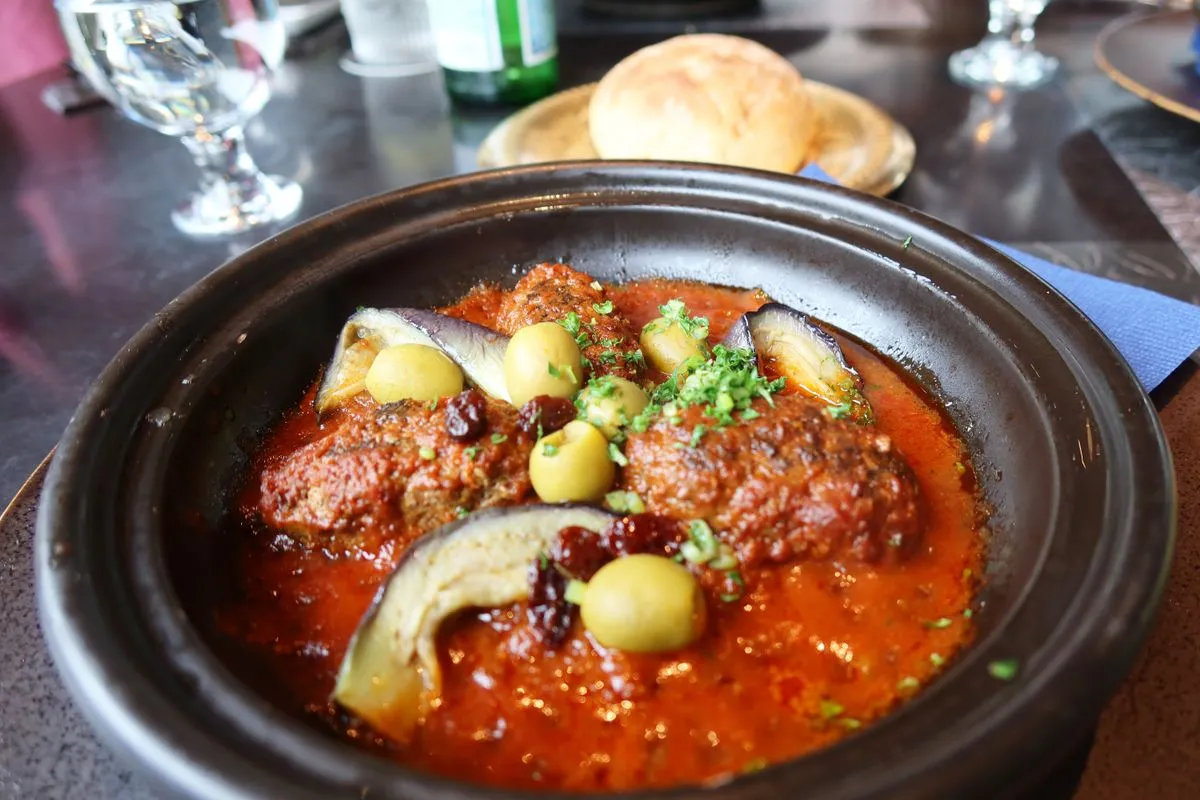
Tunisian kefta is North Africa’s answer to the Italian polpette - hand-shaped ground beef meatballs spiced with harissa, coriander, and nutmeg, then simmered in a bold tomato sauce until every bite is packed with heat and flavor. Unlike Moroccan kefta mkaouara which relies on cumin and paprika, Tunisian kefta is defined by harissa - the fiery chili paste that is the backbone of Tunisian cooking.
What makes this recipe distinctly Tunisian is the combination of mashed potato mixed into the meat (a traditional tenderizer that keeps the meatballs pillowy soft) and fresh parsley for brightness. The meatballs brown in olive oil before simmering in a crushed tomato sauce enriched with garlic and tomato paste. Served over fluffy couscous, this is one of the most comforting weeknight dinners in the Tunisian repertoire.
If you enjoy Ethiopian berbere meatballs or harissa lamb meatballs, this Tunisian version brings a different kind of heat - harissa-forward, warm, and aromatic rather than chili-heavy.
Key Takeaways
- Harissa is the star - use 2 tsp in the meat mixture and serve extra on the side. Adjust to your heat preference.
- Mashed potato tenderizes - a traditional Tunisian trick that keeps meatballs soft and juicy. Leftover mashed potato works perfectly.
- Grate and squeeze the onion - removes excess moisture so meatballs brown properly instead of steaming.
- Brown first, then simmer - the two-step method creates a flavorful crust before the sauce tenderizes everything.
- Serve over couscous - the fluffy grains absorb the harissa-tomato sauce beautifully.
How to Make Tunisian Kefta
- Grate the onion for the meatballs on the large holes of a box grater. Place in a clean kitchen towel and squeeze out excess moisture.
- Mix the meat. In a large bowl, combine ground beef, grated onion, parsley, breadcrumbs, egg, mashed potato, 2 tsp harissa, coriander, cumin, nutmeg, salt, and pepper. Mix just combined - do not overwork.
- Shape the mixture into 20 meatballs, about 1.5 inches across. Wet your hands with cold water between rolls.
- Brown the meatballs. Heat olive oil in a large skillet over medium-high heat. Add meatballs in batches, leaving space between each. Brown 3 to 4 minutes per side until golden. Remove to a plate.
- Make the sauce. Reduce heat to medium. Add diced onion and cook 3 to 4 minutes until softened. Stir in garlic and tomato paste. Cook 1 minute until fragrant.
- Simmer. Pour in crushed tomatoes and water. Stir in sugar and a pinch of salt. Bring to a gentle simmer.
- Combine. Return meatballs to the skillet, nestling them into the sauce. Cover and simmer 15 to 18 minutes, turning once halfway, until sauce thickens and meatballs are cooked through.
- Serve hot over couscous with extra harissa on the side and fresh parsley for garnish.
Ingredients
For the meatballs:
- 1 lb (450 g) ground beef, 80/20
- 1 small onion, finely grated
- 2 tbsp fresh parsley, finely chopped
- 2 tbsp plain breadcrumbs
- 1 large egg
- 2 tbsp mashed potato (leftover or freshly made)
- 2 tsp harissa paste, plus more for serving
- 1 tsp ground coriander
- 1/2 tsp ground cumin
- 1/4 tsp ground nutmeg
- 1/2 tsp kosher salt
- 1/4 tsp black pepper
For the tomato sauce:
- 2 tbsp olive oil
- 1 medium onion, diced
- 2 cloves garlic, minced
- 1 tbsp tomato paste
- 1 can (14 oz / 400 g) crushed tomatoes
- 1/2 cup water
- 1 tsp sugar
For serving:
- Couscous, cooked according to package directions
- Extra harissa paste
- Fresh parsley, chopped
Why Harissa Makes Tunisian Kefta Different
Harissa is a chili pepper paste made from roasted red peppers, Baklouti or guindilla peppers, garlic, caraway, coriander, and olive oil. It is the national condiment of Tunisia - used in everything from stews to sandwiches to breakfast eggs.
In this kefta recipe, harissa does two jobs: it seasons the meatballs from the inside with warm, smoky heat, and it can be served on the side for diners who want more fire. The coriander and nutmeg in the meat mixture complement the harissa’s complex spice profile, creating layers of flavor that simple chili powder cannot achieve.
The Mashed Potato Trick
Tunisian home cooks have used mashed potato in kefta for generations. The starch binds the meat loosely, traps moisture during cooking, and creates a softer, almost dumpling-like texture inside the meatball. It is the same principle as a panade (bread soaked in milk) but with a smoother result.
If you do not have leftover mashed potato, boil a small potato until soft, mash it with a fork, and measure out 2 tablespoons. The small investment of time makes a noticeable difference in the final texture.
Tips for Perfect Tunisian Kefta
- Fat content matters. Use 80/20 ground beef. Lean meat (90/10 or higher) produces dry, crumbly meatballs.
- Rest the mixture. If time allows, refrigerate the shaped meatballs for 15 to 20 minutes before browning. This helps them hold together in the skillet.
- Do not crowd the pan. Brown meatballs in batches. Crowded meatballs steam instead of browning, and you lose the flavorful crust.
- Taste the sauce. Crushed tomatoes vary in acidity. If the sauce tastes sharp, add another pinch of sugar to balance.
- Adjust the heat. Start with 2 tsp harissa in the meat and taste the sauce before adding more. Tunisian food is bold, but you control the fire level.
- Fresh vs dried herbs. Fresh parsley is traditional and adds brightness. If substituting dried, use 2 tsp instead of 2 tbsp fresh.
Serving Suggestions
Tunisian kefta pairs naturally with fluffy couscous - the traditional North African grain that absorbs the harissa-tomato sauce beautifully. Other serving ideas:
- Crusty bread for mopping up sauce
- Rice or bulgur wheat as a grain alternative
- Grilled vegetables - zucchini, eggplant, and bell peppers
- Simple cucumber-tomato salad with lemon and olive oil
- Labneh or yogurt on the side to cool the heat
Storage and Reheating
- Refrigerator: Store leftover meatballs in sauce in an airtight container for up to 4 days.
- Freezer: Freeze cooked meatballs in sauce for up to 3 months. Thaw overnight in the refrigerator before reheating.
- Reheat: Warm gently in a skillet over medium-low heat, adding a splash of water if the sauce has thickened too much. The microwave works in a pinch - heat in 30-second intervals.
Frequently Asked Questions
What is the difference between Tunisian and Moroccan kefta? Moroccan kefta typically uses cumin, paprika, and cinnamon, while Tunisian kefta is defined by harissa and coriander. Tunisian versions also often include mashed potato for tenderness, which is uncommon in Moroccan recipes. Both are delicious, but the heat profiles are quite different.
Can I use ground lamb instead of beef? Yes. Lamb is traditional in many North African kefta recipes. Use the same fat ratio (80/20) and follow the recipe as written. Lamb will add a richer, gamey flavor that pairs well with harissa.
Is harissa very spicy? Harissa heat varies by brand. Most commercial harissa pastes range from medium to hot. Start with 2 tsp in the meat mixture and taste the sauce before adding more. You can always serve extra harissa on the side for those who want more heat.
Can I bake these meatballs instead of browning them? Yes. Preheat oven to 400F (200C). Place shaped meatballs on a parchment-lined baking sheet and bake 15 to 18 minutes until browned and cooked through. Then add them to the simmering sauce for the final 5 minutes.
What side dishes go with Tunisian kefta? Couscous is the classic pairing. Other options include fluffy rice, bulgur wheat, crusty bread, grilled vegetables, or a simple cucumber-tomato salad. A dollop of labneh or yogurt helps cool the heat.
Can I make the meatballs ahead of time? Yes. Shape the meatballs and refrigerate them on a parchment-lined tray for up to 24 hours before cooking. You can also freeze uncooked meatballs on a tray, then transfer to a freezer bag for up to 3 months.
Sources
- Food Blog Alliance - Tunisian Kefta De Boeuf
- Excited Food - Tunisian Meatballs Recipe
- Taste of Maroc - Moroccan Kefta Tagine